
The complete guide
Choosing Small Breed Grain Free Dog Food, A Practical Buyer's Guide
The problem with buying food for a little dog
Most dry dog food is sold in bags built for big dogs. You walk out with five or ten kilos, tip some into a bowl, and the rest sits in the laundry cupboard for the next three months. For a small breed eating a modest portion each day, that is a long time for a bag to stay open.
A 2.5 kg pack solves a very ordinary problem. It is light enough to carry in one hand, it fits in a normal cupboard, and a single small dog will work through it at a sensible pace. That is the main practical argument for this size, and it is a good one.
This guide walks through what the food actually is, how to judge whether it suits your dog, how to work out portions and cost, and how to store and change foods without drama. There is no health advice here. Anything medical belongs with your vet.
What this food is
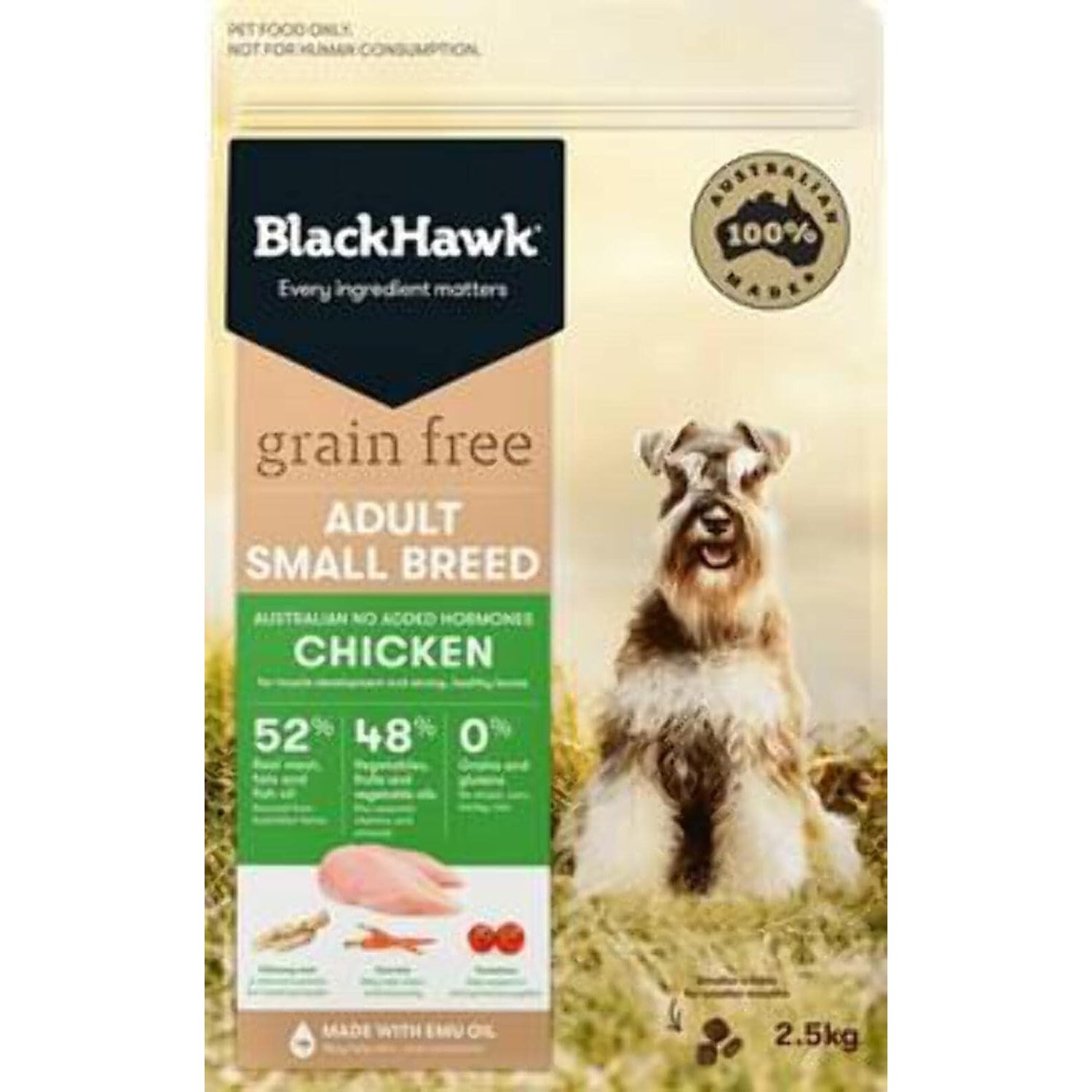
Small Breed Grain Free Chicken Dry Dog Food 2.5 kg is a dry kibble food. The life stage given is adult. The breed size given is small breeds. The protein named is chicken, and the maker labels the food grain free. It comes as one 2.5 kg bag.
The printed ingredient list starts with chicken meal, field peas, chicken fat (preserved with natural antioxidants), tapioca, potato, sweet potato, beet pulp and chicken digest. After that come essential vitamins and minerals, fish oil, sunflower oil, chicory root, salt, alfalfa, apple, carrot, brewer's yeast, natural antioxidants, pumpkin seed, coconut oil, yucca shidigera, spinach, dried kelp, tomato powder, emu oil, yoghurt powder, glucosamine HCI, blueberries, cranberries, dandelion, parsley, peppermint, rosemary and chondroitin sulphate.
That full list matters more than any marketing line. Ingredient lists are printed in order, so the first handful of items tell you most of what you need to know about what is in the bag.
How dry kibble fits into daily feeding
Dry food is the simplest option for most households. There is nothing to refrigerate, nothing to spoon out of a tin, and nothing that goes off in a bowl after an hour. You measure, you pour, you serve.
The maker's feeding directions are brief. Check the labels so you are feeding the right amount, do not overfeed, and always provide fresh, clean water. That last part is not a throwaway line. Dry food and a full water bowl go together, and it is worth refreshing the water at least once a day.
For a small dog, the difference between a correct portion and a generous one can be a sizeable share of the daily amount. A kitchen scale is the easiest fix. Weigh one portion once, mark the level on a scoop or cup, and you can go back to eyeballing after that with confidence.
Who this pack size suits
The 2.5 kg bag works well for a few situations.
If you have one adult small dog at home, this is a normal everyday size. You will finish it in a reasonable time, and you are not dedicating a shelf to dog food.
If you are trialling a new food, a smaller pack is the sensible way to do it. Dogs have opinions. Buying a large sack of something your dog turns their nose up at is an expensive way to learn that. People hunting for the best dry food for little dogs often start with a small bag for exactly this reason.
If you travel, visit family or board your dog occasionally, a 2.5 kg bag is easy to throw in the boot without decanting. It is also a practical size to leave with a sitter.
Where it suits less well is a household with several small dogs, or anyone who would rather restock twice a year. In that case the per kilo maths usually favours a larger pack, as long as you have somewhere cool and dry to keep it.
Working out how long a bag lasts
This is the question everyone asks, and there is only one honest answer. It depends on the daily amount the feeding guide on the pack gives for your dog's weight.
The method is simple. Find your dog's weight band on the guide, note the grams per day, then divide 2500 by that number. That gives you the approximate number of days in the bag. A dog eating 50 grams a day gets roughly 50 days. A dog eating 100 grams a day gets roughly 25.
Do the same sum before you compare prices. Divide the price by 2.5 to get a cost per kilo, then multiply by the kilos your dog goes through in a month. That is the real monthly cost, and it is a far better comparison than the sticker price on the front of two different bags.
Reading the ingredient list against your dog
If your dog has a known reaction to a particular ingredient, the ingredient list is the thing to check, and it is the one check you can do yourself in about two minutes. Read the full list, printed above, against whatever your vet has told you to avoid.
The food is labelled grain free by the maker, which matters to some owners. Others are watching for a specific protein, a specific vegetable, or something they have been told to steer clear of. Either way, read the list rather than the label on the front.
If you are not sure whether an ingredient is a problem for your dog, that is a conversation for your vet. We are not in a position to tell you what any ingredient will or will not do, and we are not going to pretend otherwise.
Changing foods without upsetting the routine
Switching foods abruptly is rarely a good idea. The usual approach is to change over gradually across about a week.
Start by mixing a small share of the new food into the one your dog already eats. Each day, shift the ratio a little further towards the new food. By the end of the week you should be feeding the new food on its own. Keep the total daily amount steady through the changeover rather than adding the new food on top.
Go slower if your dog seems unsettled, and talk to your vet if anything concerns you during the switch. There is no prize for rushing it.
Storing a bag of dry food properly
Dry food keeps best sealed, cool and dry. Direct sun, heat and humidity are the three things to avoid.
A kitchen or pantry cupboard is usually ideal. A hot garage or a damp laundry is less so. If you tip the kibble into an airtight container, keep the original bag, because that is where the feeding guide and the ingredient list live. Many people fold the bag down inside the container, which solves both problems at once.
Use a clean, dry scoop, and wash the food bowl regularly like any other dish. Keep the water bowl clean too, and topped up.
How to judge any small breed food
A few habits make this easier whatever you end up buying.
Read the first five ingredients rather than the front of the pack. Check the life stage and breed size match your dog. Work out the cost per kilo instead of comparing bag prices. Buy a size you will finish in good time. And when something feels like a health question rather than a shopping question, ask your vet instead of the internet.
Those five checks will take you further than any amount of label reading on the front of the bag.
The short version
Small Breed Grain Free Chicken Dry Dog Food 2.5 kg is a dry kibble food for adult small breeds, with chicken as the protein and a grain free label from the maker. One bag holds 2.5 kg, which is a practical size for a single small dog or for trying something new.
Feed to the guide printed on the pack, do not overfeed, and keep fresh, clean water available. Store the bag sealed somewhere cool and dry, change foods over about a week rather than overnight, and read the ingredient list against anything your dog is known to react to.
Delivery is dispatched within 2 working days and then takes up to 7 working days by tracked courier, Australia only. It is free on orders of $99 or more and a flat $12 under that. Change of mind returns are accepted within 14 days of delivery if the pack is unopened and still in its original sealed packaging, with return postage paid by you. Faulty, damaged or wrongly described goods are put right under the Australian Consumer Law.