
The complete guide
Wet Dog Food Trays Buyer's Guide
The problem with feeding time
Feeding a dog should take thirty seconds. Somehow it often does not. There is the tin that needs a can opener, the half used portion that has to be covered and squeezed into an already full fridge, the scoop that has gone missing, and the guessing about whether that was too much or not enough. Multiply that by two meals a day, every day, and a small annoyance turns into a daily one.
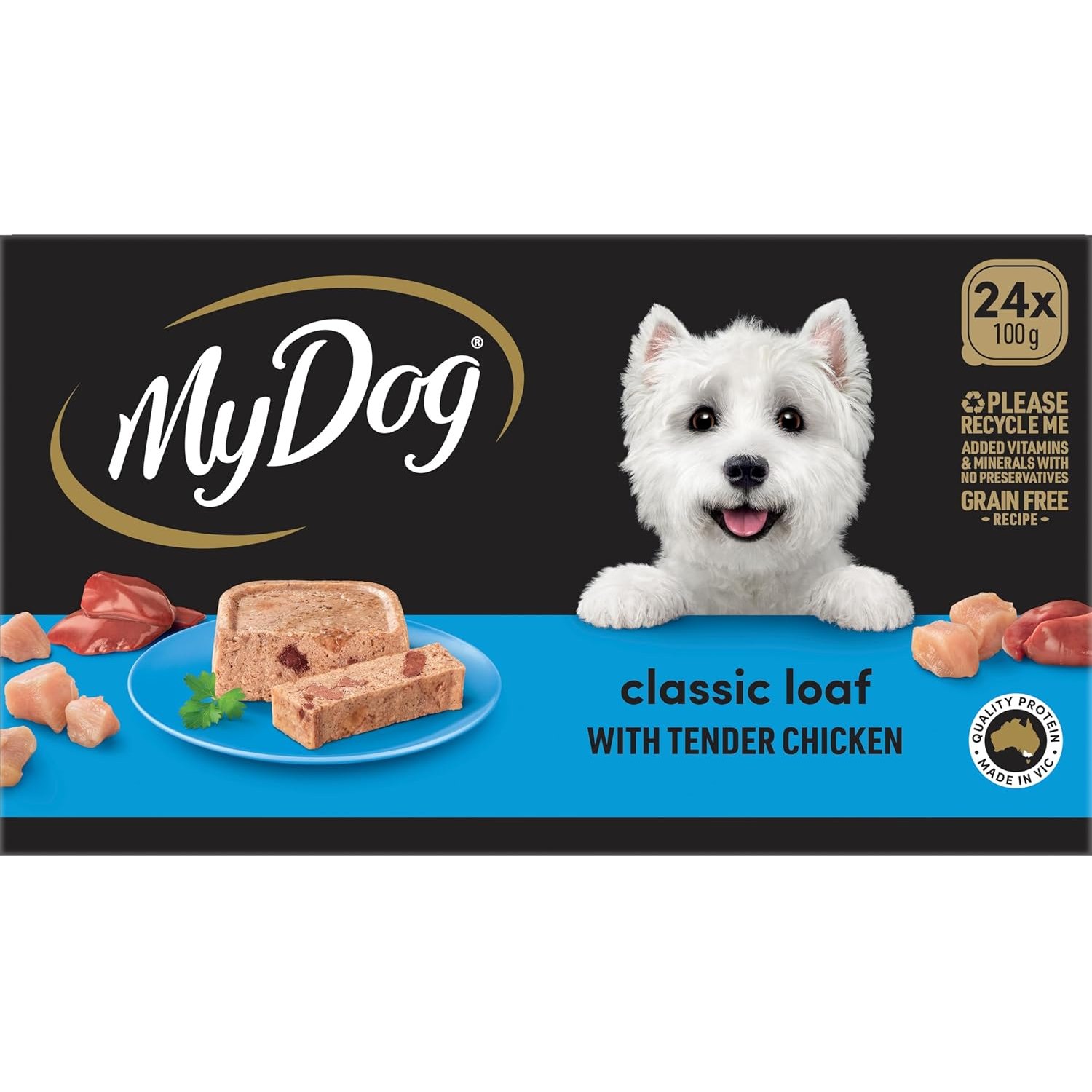
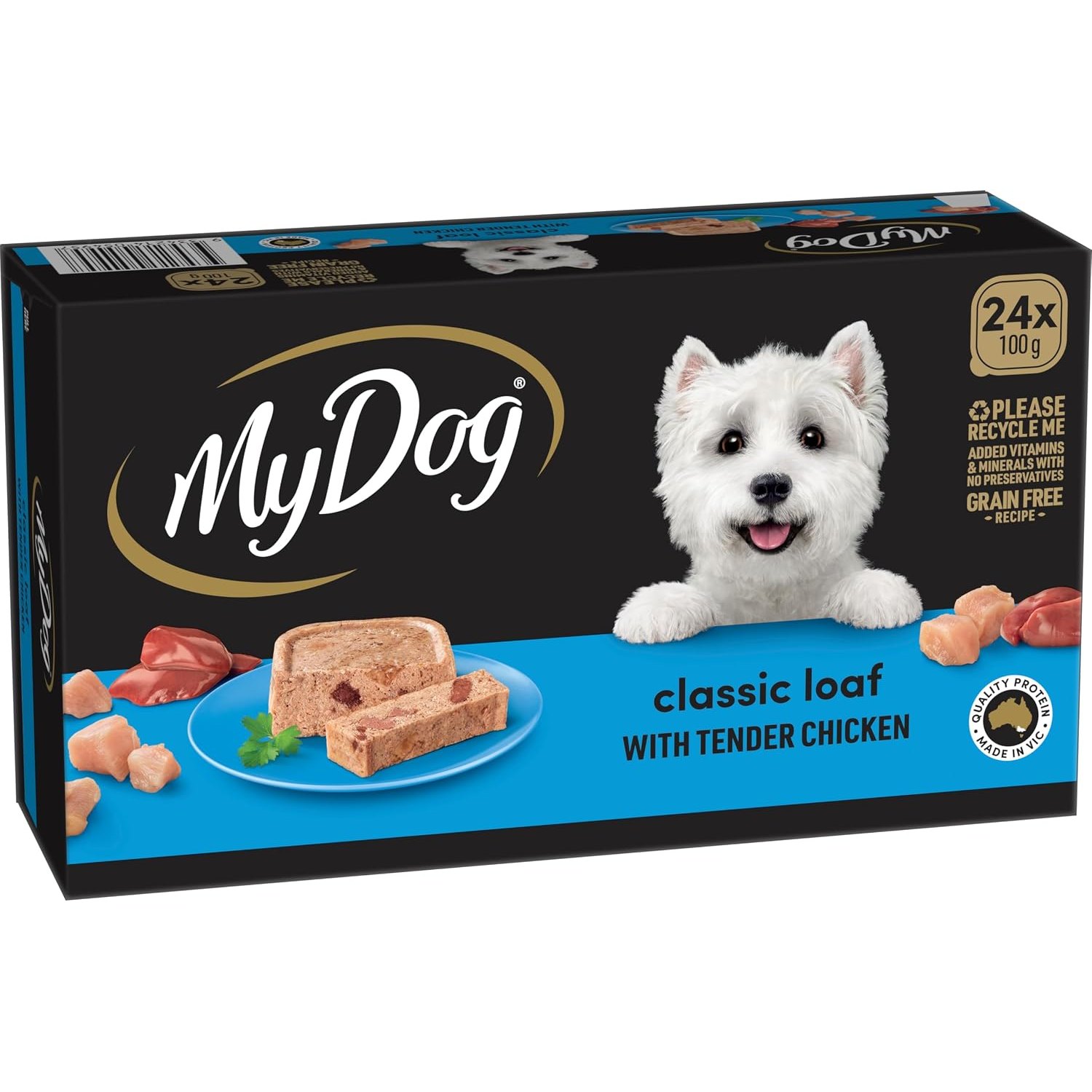
Single serve trays exist to take that friction out. Each one holds a set amount, you peel the lid, tip it in and move on. Chicken Loaf Wet Dog Food 24 x 100 g Trays follows that idea, with 24 trays of 100 g in the box and 2.4 kg of food in total. If the thing that bothers you about wet food is the leftovers and the mess, portioned trays are usually the fix.
How a loaf differs from chunks
Wet dog food tends to come in two broad styles. One is chunks or pieces sitting in gravy or jelly. The other is a loaf, which is a smooth, even block that holds its shape until you break it up.
A loaf has a couple of practical advantages. It comes out of the tray in one piece, so there is less running down the side of the bowl. It mashes easily, which matters if you like to mix wet food through a dry meal or push it into a slow feeder or a lick mat. And for dogs who pick around in gravy and leave half the chunks behind, a loaf gives them less to sort through.
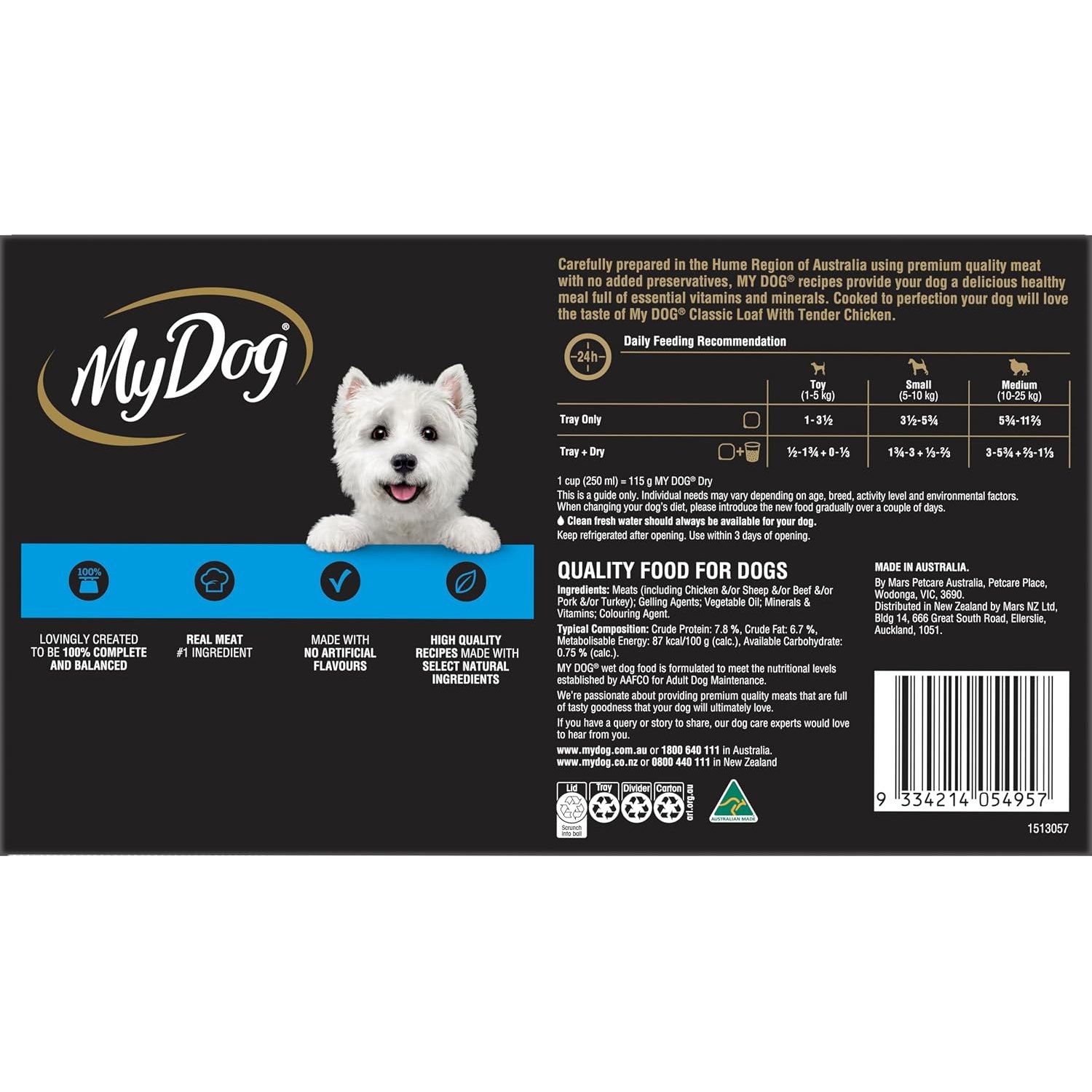
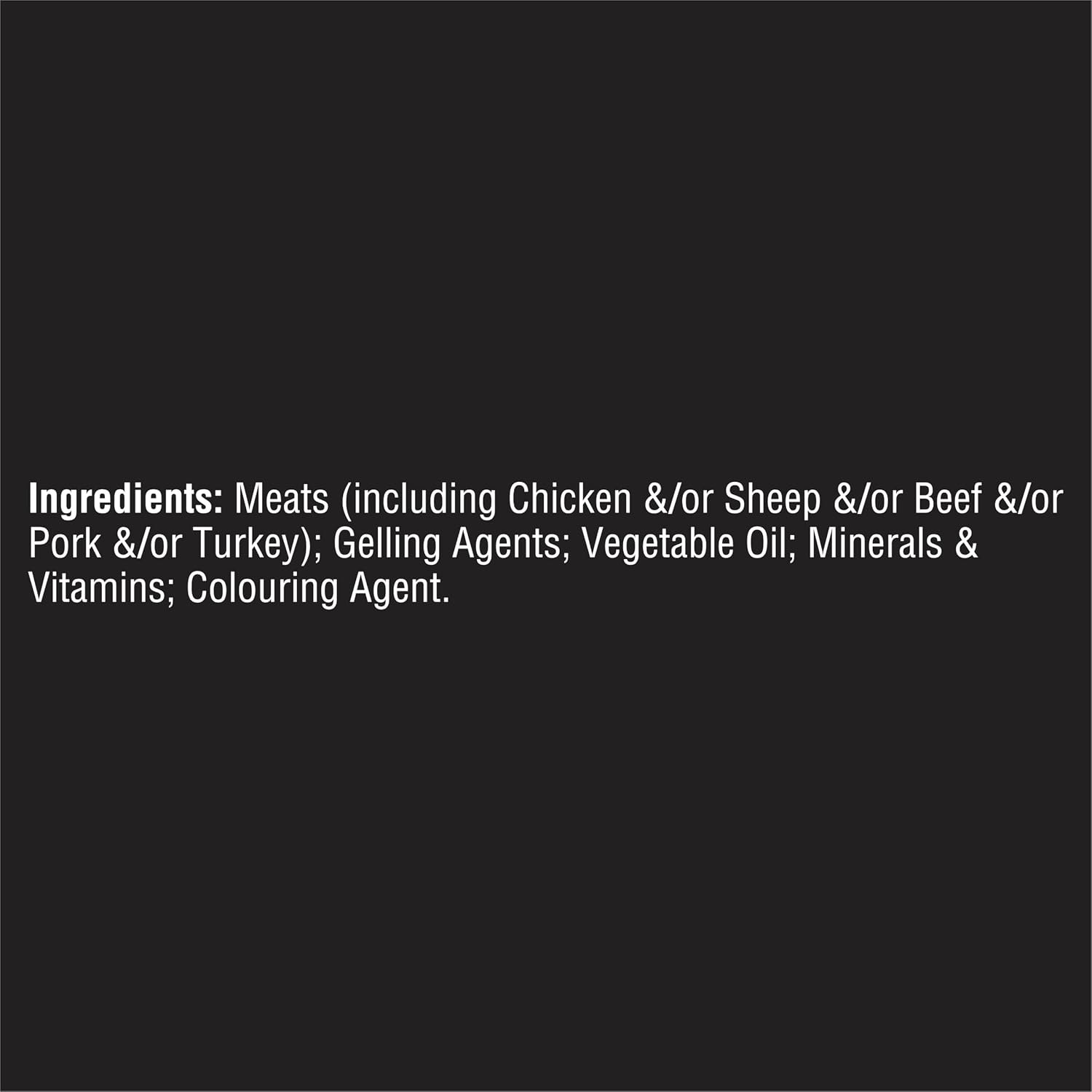
The ingredient list the maker prints for this food reads: meats (including chicken and/or sheep and/or beef and/or pork and/or turkey), gelling agents, vegetable oil, minerals and vitamins, and a colouring agent. The gelling agents are what give the loaf its structure. The pack also carries the statement that it is made with no artificial flavours.
Who the pack size suits
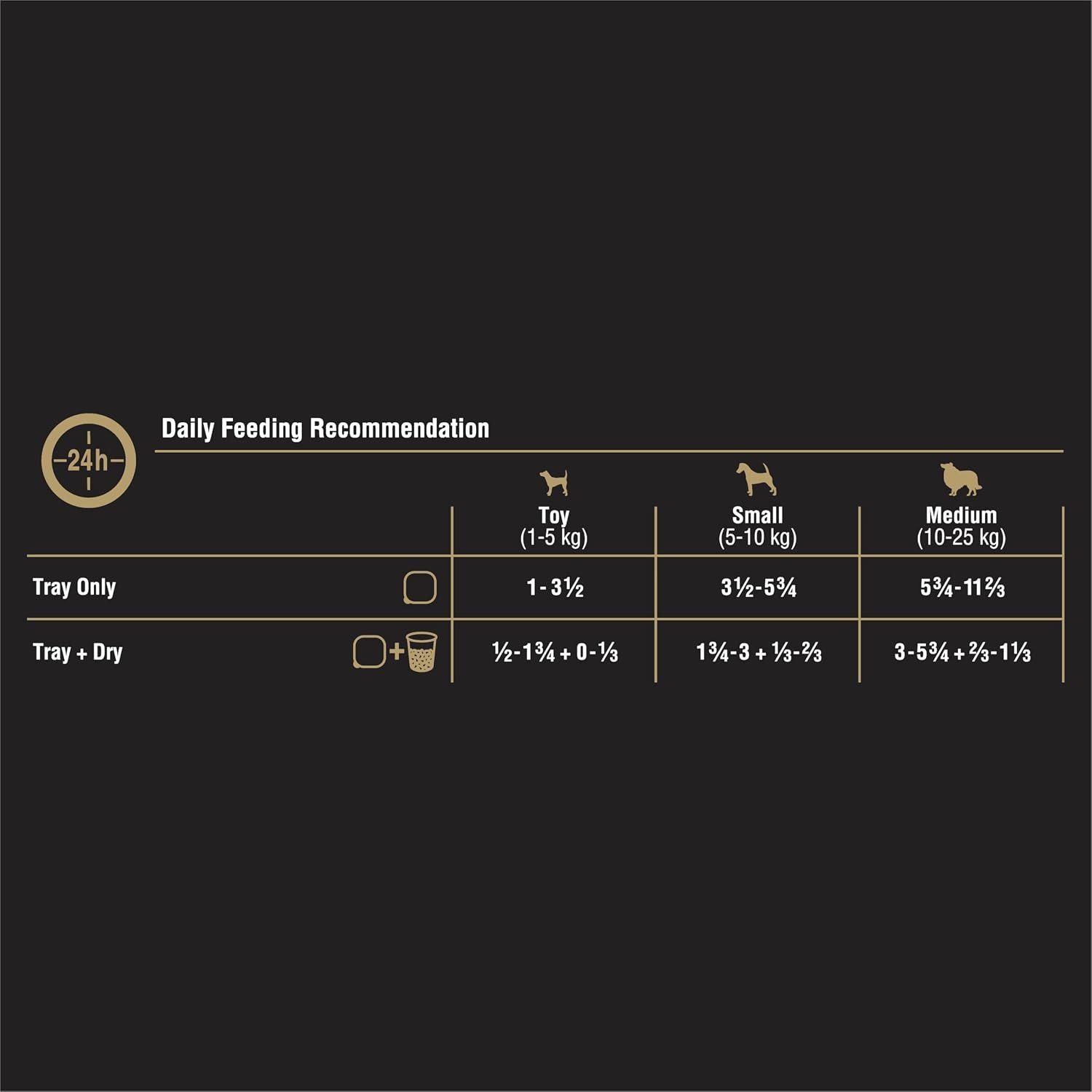
Twenty four trays sounds like a lot until you do the arithmetic. How long a box lasts depends entirely on how much your dog eats, and that comes from the feeding directions printed on the pack rather than from any rule of thumb.
Say your dog takes one tray a day. The box covers a bit over three weeks. A dog on two trays a day gets twelve days out of it. Three trays a day and you are looking at eight. In a house with two or three dogs, a 24 pack might be a week's worth. That is why the same product can feel like a bulk buy to one household and a top up to another.
The maker is clear that the feeding directions are a guide only, and that individual needs vary with age, breed, activity level and environmental factors. A working dog in winter and a quiet older dog in a warm flat are not going to eat the same amount. Start with the guide, watch how your dog does, and talk to your vet if you want a more precise number.
Working out whether it is good value
Comparing dog food prices is easier when you put everything on the same footing. The useful figure is cost per kilogram.
This box holds 2.4 kg. Divide the price you pay by 2.4 and you get the per kilo cost. Do the same for the tins or pouches you usually buy. A 400 g tin at a given price, a 100 g tray at another, and an eight pack of pouches all look different on the shelf, but per kilo they line up neatly and you can see which actually costs more.
Worth factoring in too is waste. If you are regularly throwing out the second half of a tin because your dog would not eat it the next day, the headline price on that tin is not what you are really paying. Portioned dog meals tend to cut that out, which can close the gap even when the per kilo price is a little higher.
Reading the label for your own dog
Every dog is an individual, and the only person who knows yours is you. Before you commit to a new food, read the ingredient list against anything your dog has reacted to in the past. In this case, the meat content is listed as possibly drawing on chicken, sheep, beef, pork or turkey. If your dog has a known problem with one of those meats, that is worth noting and worth raising with your vet.
We will not make any claims here about what a food will do for a dog's health, because that is not something a product page can honestly promise. If you have a question about your dog's diet, weight, or any symptom you have noticed, your vet is the right person to ask. They know your dog's history, and they can look at the label with you.
Changing foods without upsetting anything
Dogs are creatures of habit, and a sudden swap in food can unsettle them. The maker's advice is to introduce the new food gradually over a couple of days. Many owners prefer to go slower than that and stretch the change across about a week.
A simple approach is to start with a quarter of the new food mixed into three quarters of the old, hold that for two days, then move to half and half, then three quarters new, and finally all new. If your dog seems off at any stage, drop back a step and take longer. There is no prize for rushing.
Keep fresh water available throughout, as you would any other week. Dogs on wet food still need their own water bowl, topped up and washed daily.
Storing trays properly
Sealed trays sit happily in a cupboard. Keep them somewhere cool and dry, out of direct sunlight, and away from heat sources like the back of a stove. They do not need the fridge until they are opened.
Once a tray is open, treat it like any other fresh food. Cover it, put it in the fridge, and use what is left within a day or two. A reusable silicone lid or a small container works well and keeps the smell from drifting through the fridge. If your dog turns their nose up at food straight from the cold, leave it out for a little while so it comes closer to room temperature.
Rotate your stock as you would in a pantry. When a new box arrives, put it behind the one you are working through so the older trays get used first. Check the date printed on the trays now and then.
Where trays earn their keep
Beyond everyday feeding, a few situations suit single serve portions particularly well. Travel is the obvious one. Trays stack flat, need no refrigeration while sealed, and mean nobody has to guess at portions while you are away. The same applies to kennel stays, a sitter, or a few days at a relative's place. Hand over the right number of trays and the instructions are already done.
They also help in homes with more than one dog, where each bowl needs a different amount. Counting out trays is simpler than weighing food twice over. And if somebody else in the house does the feeding sometimes, a tray is hard to get wrong.
Delivery and returns
Orders are dispatched within 2 working days, then arrive within up to 7 working days by tracked courier. Delivery is available within Australia only. Shipping is free on orders of $99 or more, with a flat $12 under that.
If you change your mind, you have 14 days from delivery to return an unopened pack in its original sealed packaging, with return postage at your cost. If something turns up damaged, faulty or not as described, we will sort it out under the Australian Consumer Law. There is no separate warranty on food.
The short version
Chicken Loaf Wet Dog Food 24 x 100 g Trays is a straightforward wet food multipack for adult dogs of all breed sizes. You get 24 trays at 100 g each, 2.4 kg in total, in a loaf form that spoons out cleanly and mixes easily. The maker lists meats (including chicken and/or sheep and/or beef and/or pork and/or turkey), gelling agents, vegetable oil, minerals and vitamins, and a colouring agent, and states the food is made with no artificial flavours.
Use the feeding guide on the pack to work out your dog's daily serve, divide 24 by that number to see how long a box lasts, and change foods over gradually. Keep water in the bowl, keep an eye on the ingredient list if your dog has known sensitivities, and ask your vet about anything to do with their health.