
The complete guide
Buying Dry Kibble For A Large Dog, Without The Guesswork
The problem with feeding a big dog
Large dogs eat in a way that catches people out. You bring home a bag that looks substantial in the shop, and a fortnight later the scoop is scraping the bottom. Then it is another trip, another lift into the boot, another line on the shopping list. Multiply that across a year and the admin adds up faster than the cost does.
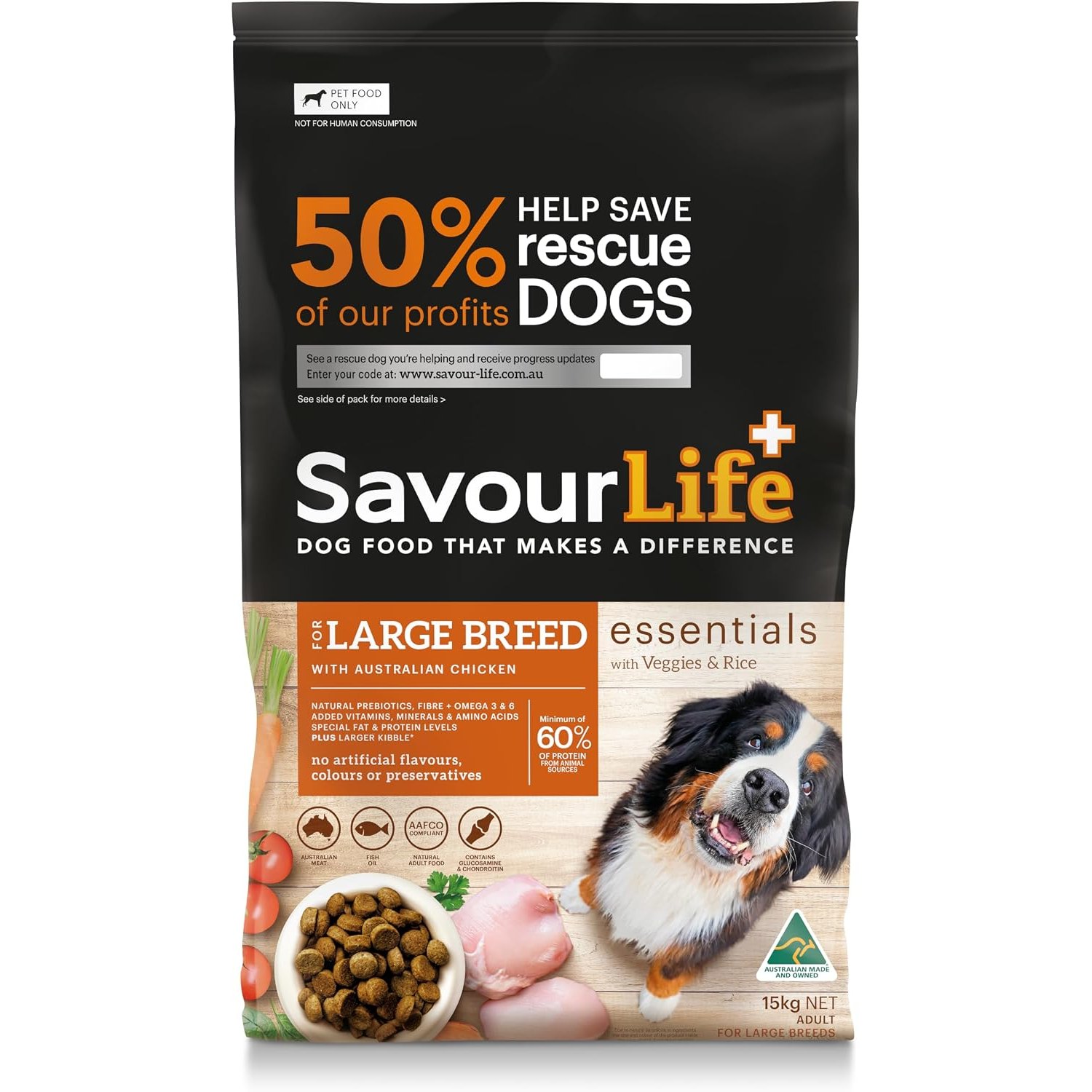
The fix is not complicated. Buy in a size that matches how much your dog actually eats, store it properly, and know what is in it. That is what Large Breed Chicken & Rice Kibble 15 kg is built around. One 15 kg bag of dry kibble, chicken with vegetables and rice, made for large breed dogs.
What this food actually is
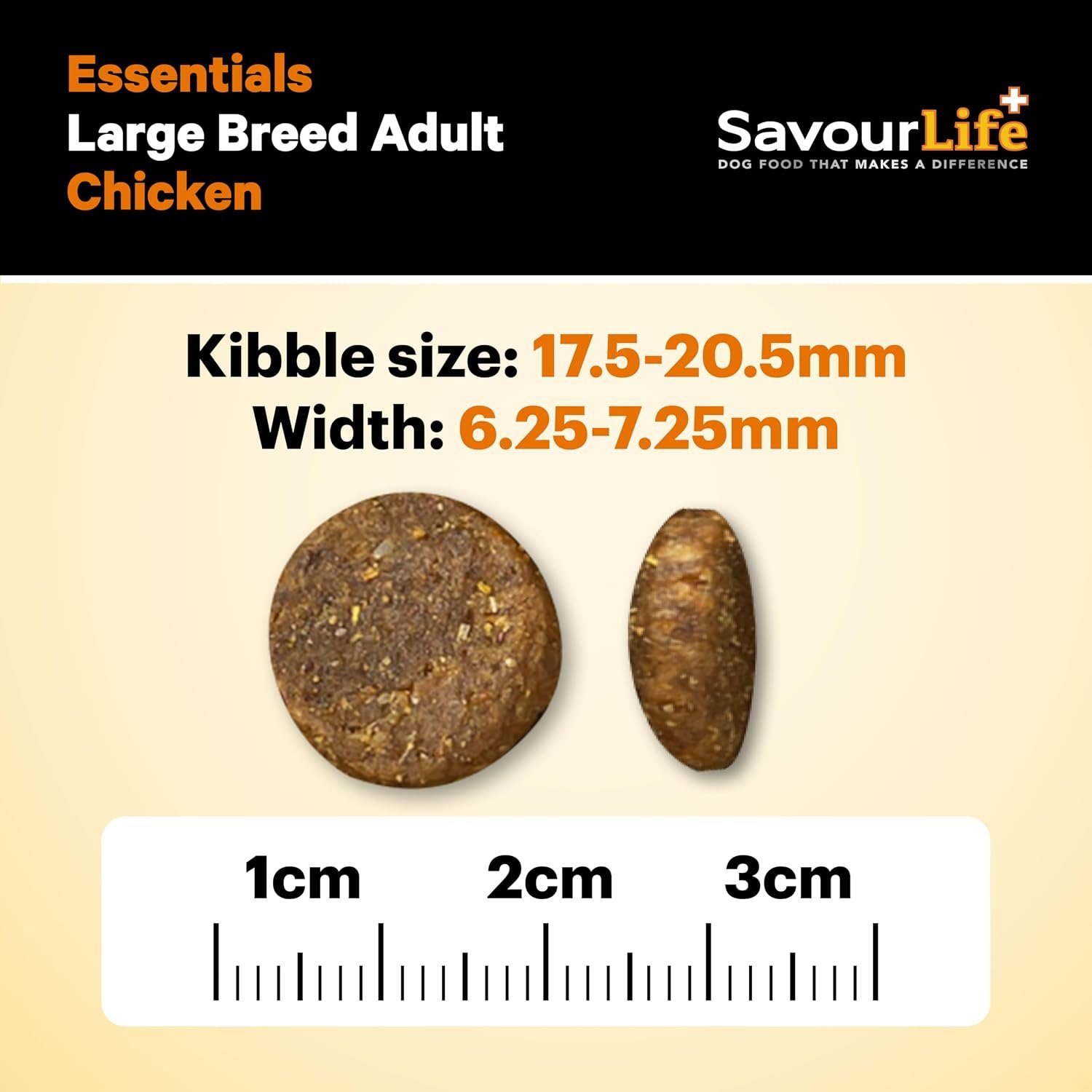
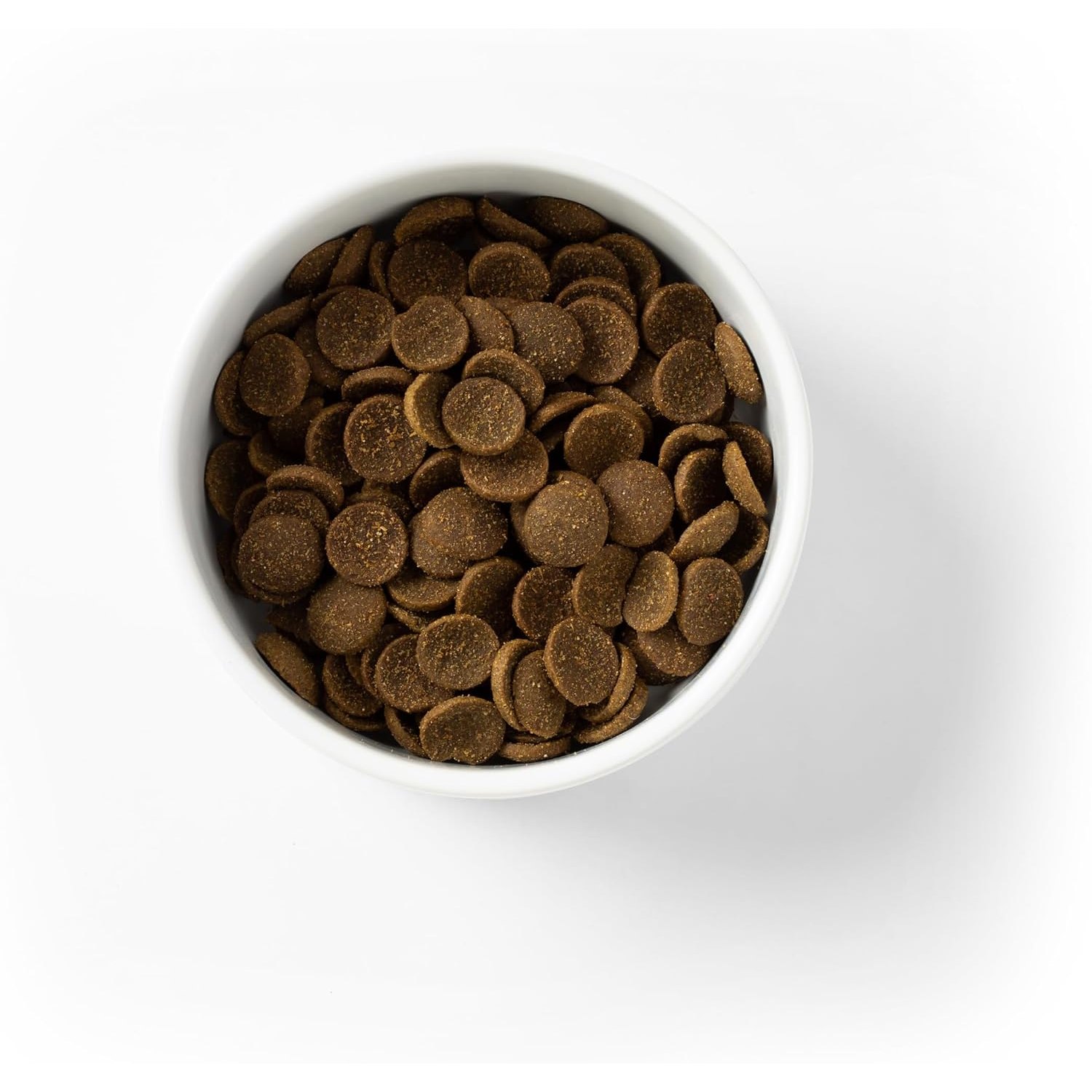
Let us keep this plain. It is dry kibble. The protein or flavour is chicken with vegetables and rice. The pack size is one 15 kg bag, and it is described for large breeds.
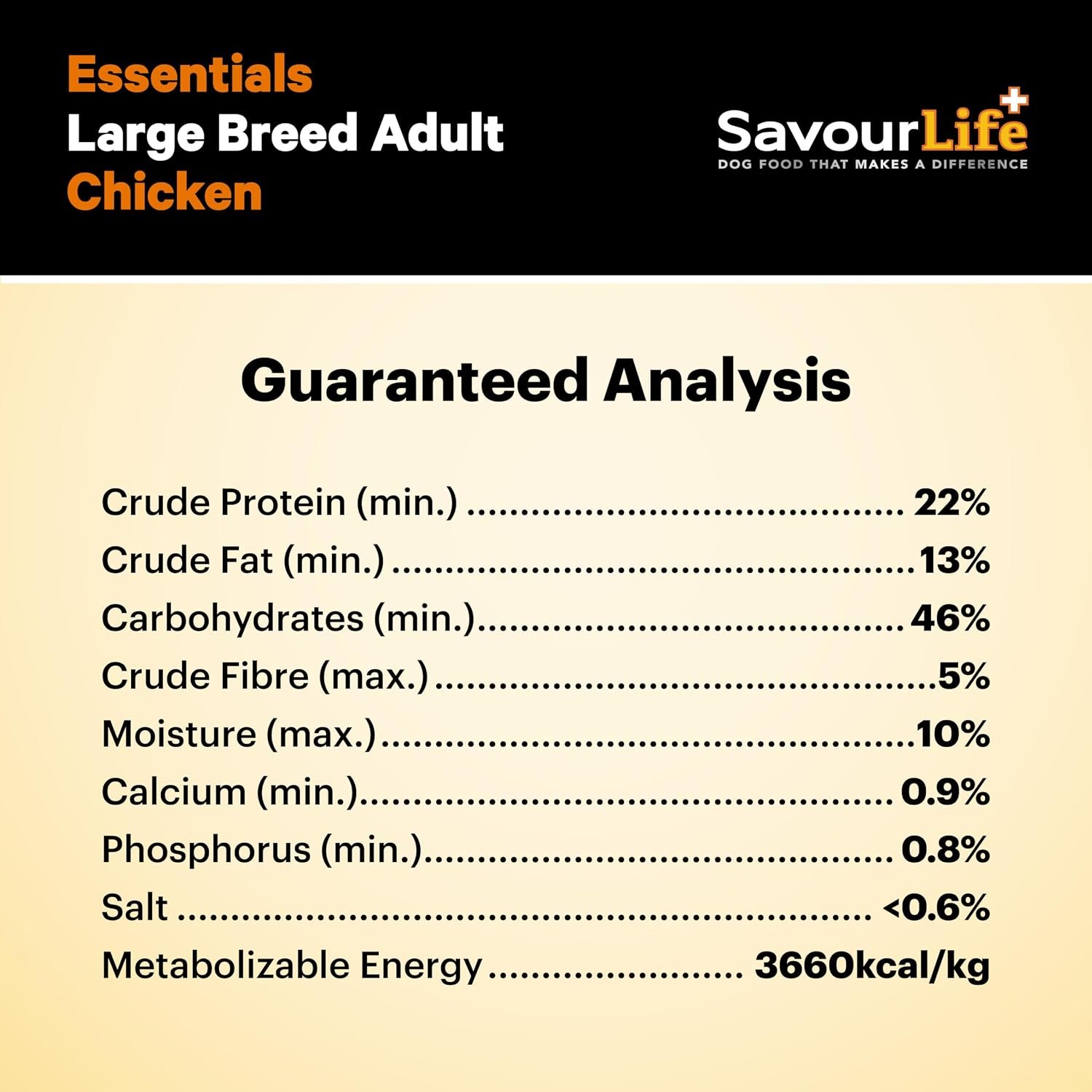
The life stage is not stated in the pack details we hold. We would rather tell you that than invent an answer, because feeding a puppy and feeding an older dog are different jobs and you deserve the real information from the pack, not a guess from a product page.
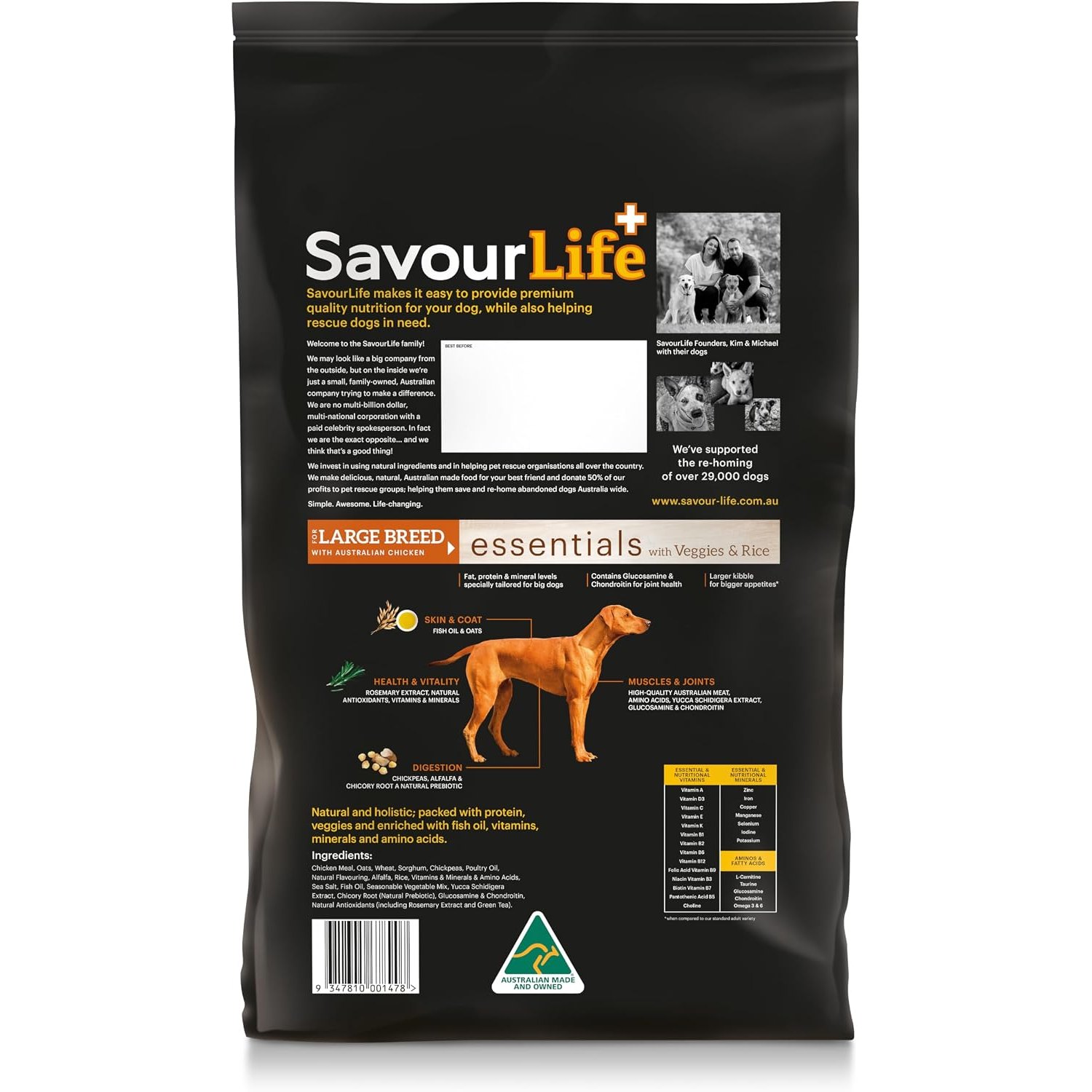
The same applies to the ingredient list. The complete list is printed on the bag. We do not hold a copy of it, so we do not publish one. If you need to check a specific ingredient before you commit, that printed list is the authority, not us and not anyone else writing about the food.
Why dry kibble suits a large dog household
Dry food is the workhorse of most big dog homes, and for good reason. It measures out quickly in the morning, it does not need refrigerating before you open the bag, and the storage is as simple as a sealed container in a cool cupboard. When you are feeding a dog that eats a serious amount each day, those small conveniences repeat themselves hundreds of times a year.
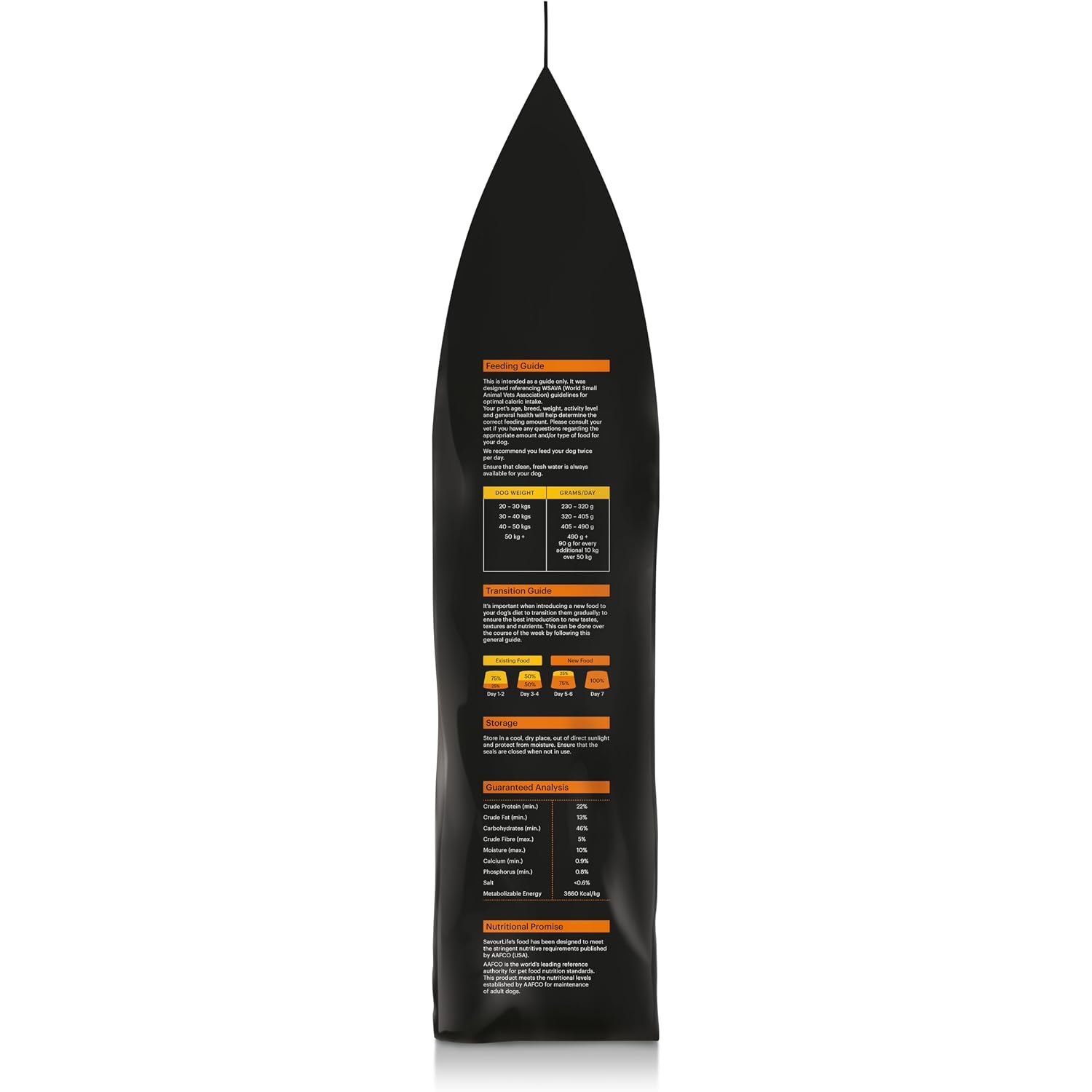
Kibble also makes portion control straightforward. A scoop is a scoop. You can read the feeding guide on the pack, match it to your dog's weight, and know exactly what is going in the bowl. That is harder to do by eye with other formats.
One honest caveat about dry food. Your dog needs fresh water available all the time, and you should be refilling and rinsing that bowl daily. It is the simplest part of the routine and the one people forget on busy mornings.
Working out whether a 15 kg bag is right for you
This is the question worth sitting with for two minutes before you order.
Start with the feeding guide printed on the pack. It will give a daily amount based on your dog's weight. Take that daily figure in grams, then divide 15,000 by it. The answer is roughly how many days one bag lasts for one dog. If you feed two dogs, halve it. If you feed three, you already know you need the big bag.
For a lot of large breed households, a 15 kg bag lands somewhere in the range where you are reordering every few weeks rather than every few days. That is the sweet spot. You are not making constant trips, but you are also finishing the bag at a sensible pace rather than leaving kibble sitting around for months.
If you have one smaller dog and the maths says a bag would take half a year to get through, a large pack is probably not the best dry kibble for big dogs choice for you, however good the per kilo price looks.
Cost per kilo, done properly
Price comparison on dog food gets murky because bag sizes are all over the place. There is one reliable way through it.
Take the price you pay and divide it by the weight in kilograms. For this bag, that is the price divided by 15. Do the same for whatever you are comparing it against. Now you have two numbers that mean the same thing and you can judge them side by side.
Then add the second layer. Use the feeding guide on the pack to work out the daily amount, and turn your cost per kilo into a cost per day. That is the number that actually hits your budget. A food that looks cheap per kilo but needs a larger daily portion may not be the saving it appears to be.
Storing a big bag so the last scoop is as good as the first
Fifteen kilograms of kibble will sit in your house for a while, so give it a decent home.
Keep it cool, dry and out of direct sunlight. Heat and moisture are what spoil dry food, which is why the laundry cupboard usually beats the garage, and why a bag sitting straight on a concrete floor is a bad habit. If the garage is your only option, lift the bag onto a shelf or pallet and use a sealed container.
Speaking of containers, you have two sensible choices. Roll the top of the bag down tightly and clip it after every use, or tip the kibble into a clean, dry airtight bin. If you go the container route, keep the original bag folded up nearby. It carries the ingredient list and the feeding directions, and you will want both again at some point.
Use a dedicated scoop, keep your hands dry, and wash the food bowl regularly. Nothing clever, just the basics done consistently.
Changing foods without drama
If your dog is currently eating something else, do not switch in one go. Change over gradually across about a week.
Begin with a small portion of the new kibble mixed into the food your dog already knows. Increase the new share a little each day and reduce the old one by the same amount, until you have fully crossed over. Some dogs take to it immediately, others want a slower run at it. If your dog seems unsettled by the change, ease back a couple of days and give it more time.
And the obvious point that is still worth making. Anything that looks like a health concern is a conversation for your vet, not for a product page. We sell the food. Your vet knows your dog.
Checking the pack against your own dog
Before the first bowl, read two things on the bag.
The ingredient list, checked against anything your dog is known to react to or anything your vet has asked you to avoid. And the feeding guide, matched to your dog's current weight rather than the weight you think your dog is. Those two checks take a minute and save a lot of second-guessing later.
If you are juggling a known sensitivity, this step is not optional. Nothing written here replaces what is printed on the pack.
Delivery and returns, in plain terms
Orders are dispatched within 2 working days, then allow up to 7 working days by tracked courier. Delivery is within Australia only. It is free on orders of $99 or more, and a flat $12 under that.
For change of mind, you have 14 days from delivery to return the pack, provided it is unopened and in its original sealed packaging, with return postage paid by you. If anything arrives faulty, damaged or not as described, contact us and it will be put right under the Australian Consumer Law. There is no separate warranty on a food product.
The short version
This is one 15 kg bag of dry kibble for large breed dogs, chicken with vegetables and rice. The ingredient list and the feeding guide are printed on the pack, and those are the figures to work from.
Decide using two simple sums. Price divided by 15 gives your cost per kilo. The daily amount from the feeding guide tells you how long a bag lasts. If both numbers suit your household, the big bag does what it is meant to do, which is keep the bowl full and keep you out of the car.
Store it cool and dry, change over gradually if you are switching, keep the water bowl fresh, and ask your vet about anything health related. That is the whole job.