

The complete guide
Buying Senior Wet Dog Food In Trays, A Practical Guide
The problem with feeding an older dog
There is a point, usually somewhere around the seventh birthday, when feeding a dog stops being automatic. The food that worked for years suddenly gets sniffed at. Portions that were right in the puppy years look like too much. And the big bag of kibble in the laundry starts to feel less like a sensible bulk buy and more like a thing your dog is tolerating rather than enjoying.
Wet food in single-serve trays is one answer to that. Not because it is magic, but because it solves some very ordinary problems. The portion is already measured. The smell is stronger, which matters to a dog whose senses have dulled a little. And when you only open 100 g at a time, nothing sits in the fridge going dry at the edges.
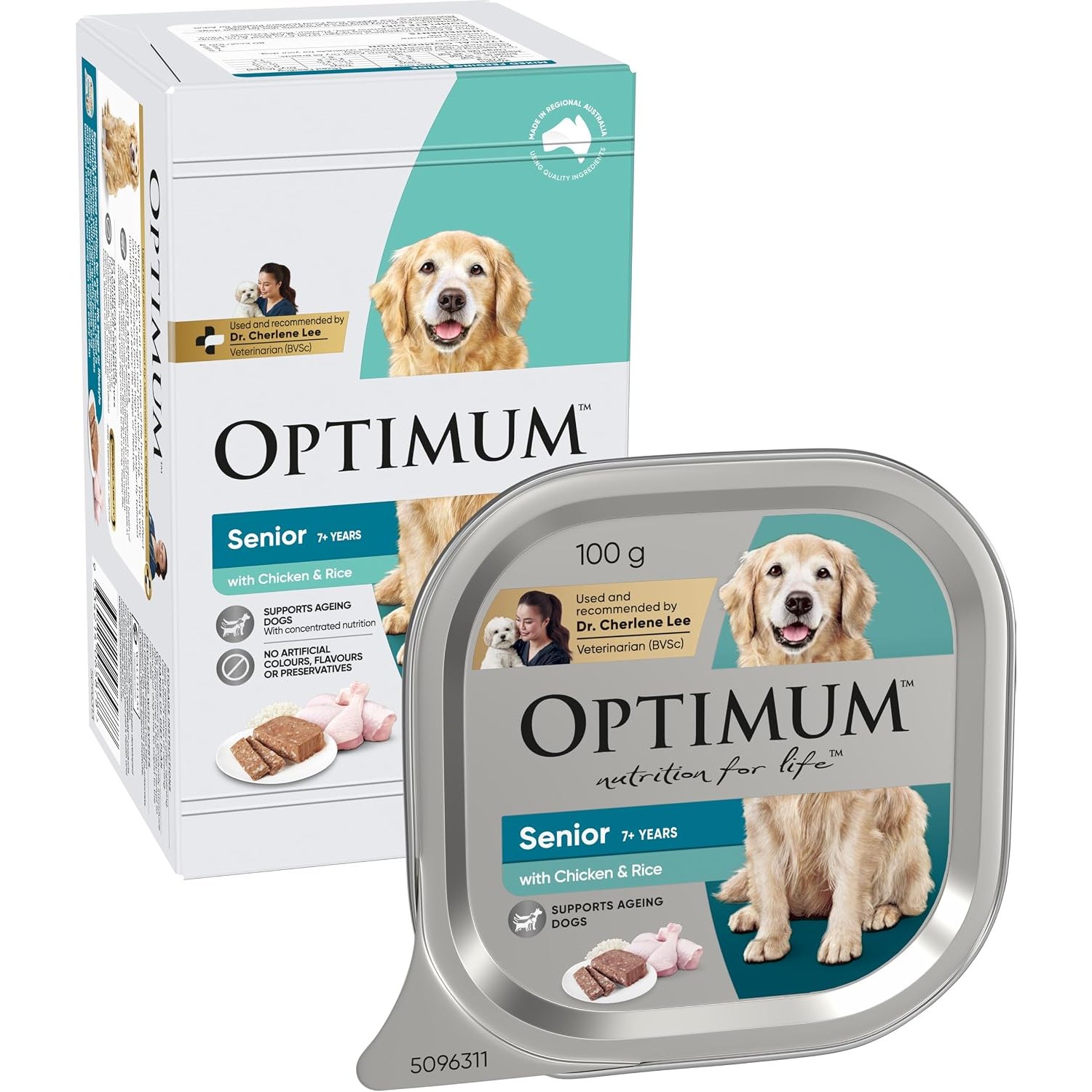
This guide walks through what to look at when you are buying senior wet dog food in trays, using this 36 x 100 g box as the worked example.
What you are actually buying
The box holds 36 trays. Each tray has 100 g of food in it. Multiply that out and you get 3.6 kg of food in one delivery. That is the whole thing, stated plainly.
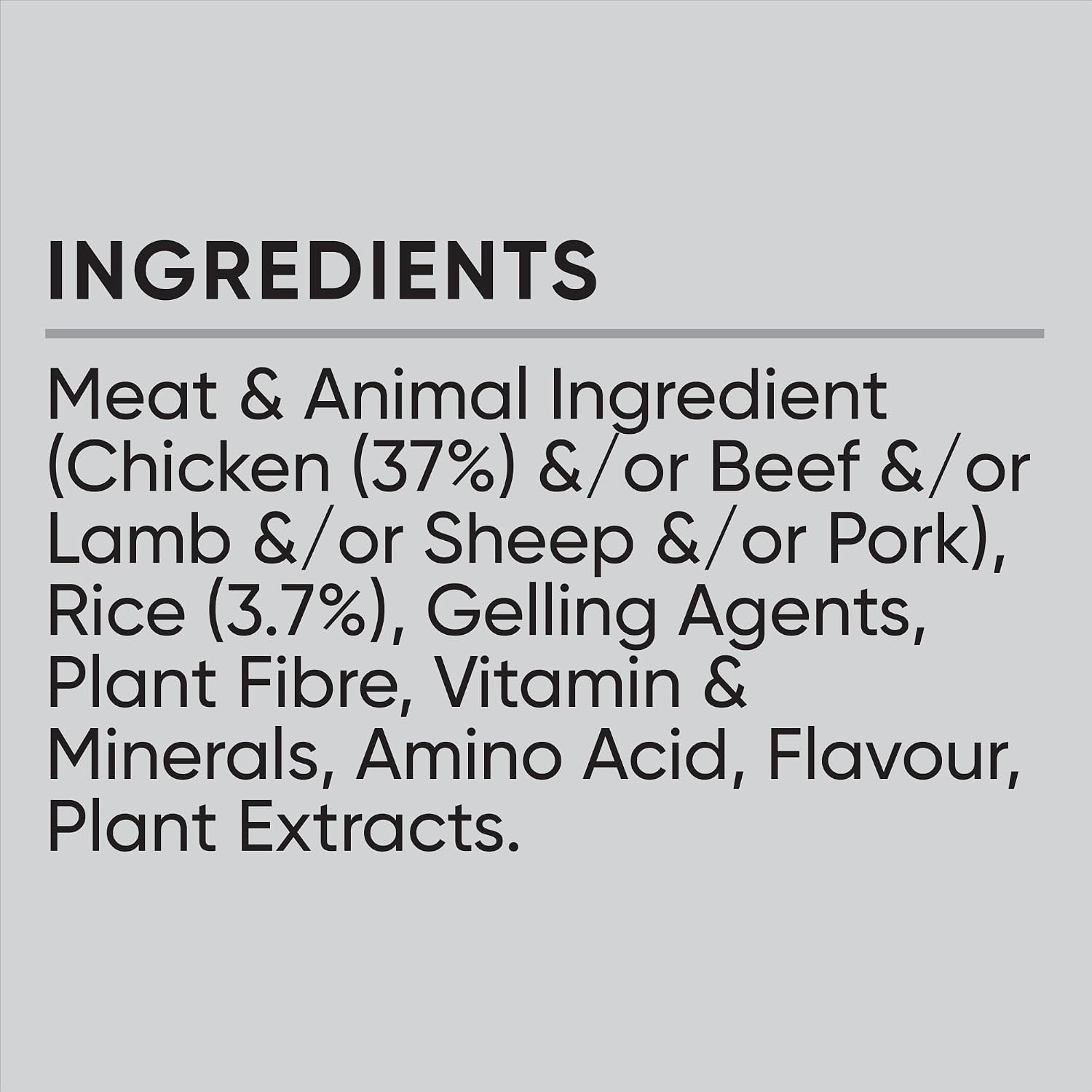
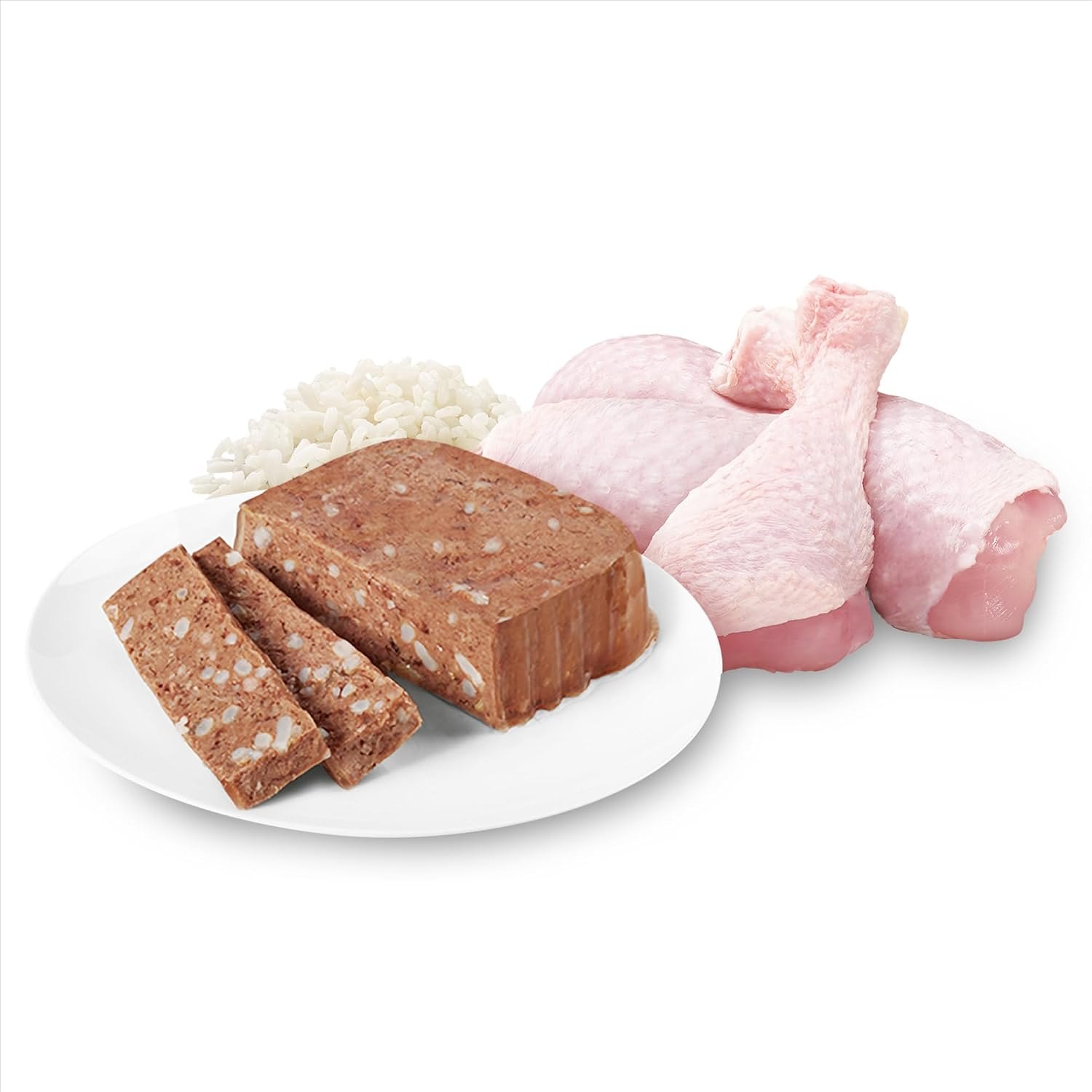
The recipe is chicken and rice. The maker prints the ingredient list as Meat and Animal Ingredient (Chicken 37% and/or Beef and/or Lamb and/or Sheep and/or Pork), Rice 3.7%, Gelling Agents, Plant Fibre, Vitamins and Minerals, Amino Acid, Flavour, Plant Extracts. The life stage is senior, which the maker defines as 7 years and over, and the pack is listed as suitable for all breed sizes.
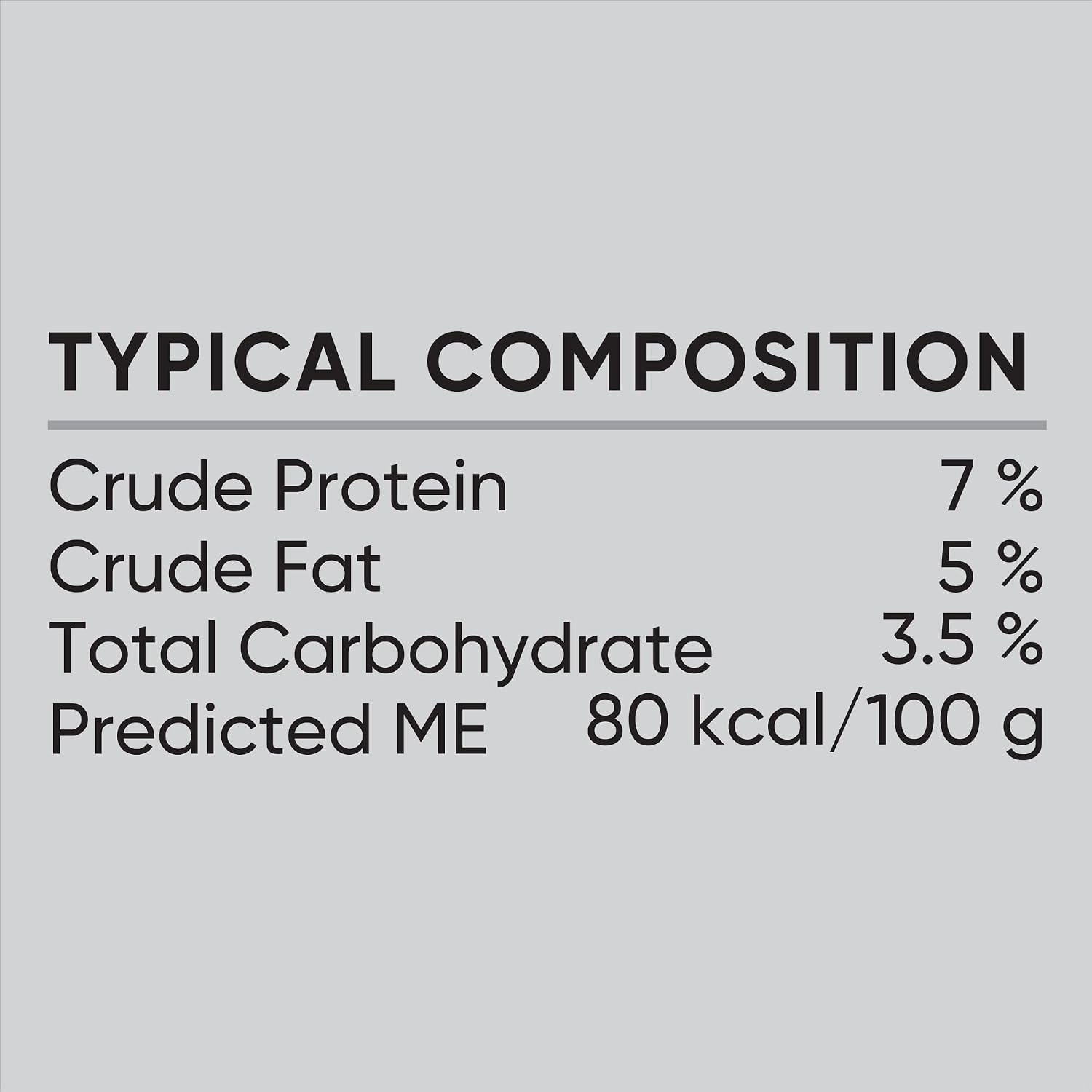
That is the full set of facts. Anything beyond it, protein percentages, calorie counts, where the food is made, is not in the information we hold, and you will find it on the printed pack when the box arrives.
Reading the "and/or" wording
Worth pausing on this, because it trips people up. When an ingredient list says chicken and/or beef and/or lamb and/or sheep and/or pork, it means the meat component may be drawn from any of those sources, and the exact mix can shift between production runs. The 37% figure refers to the chicken content as printed.
This matters if your dog has a known reaction to a particular meat. Read the printed list carefully, and if anything on it concerns you, that is a conversation to have with your vet before you order rather than after. We are not in a position to tell you whether a food is suitable for a dog with a specific sensitivity, and anyone who does tell you that without meeting your dog is overstepping.
How long a box lasts
This is the question everyone asks and the honest answer is that it depends on your dog.
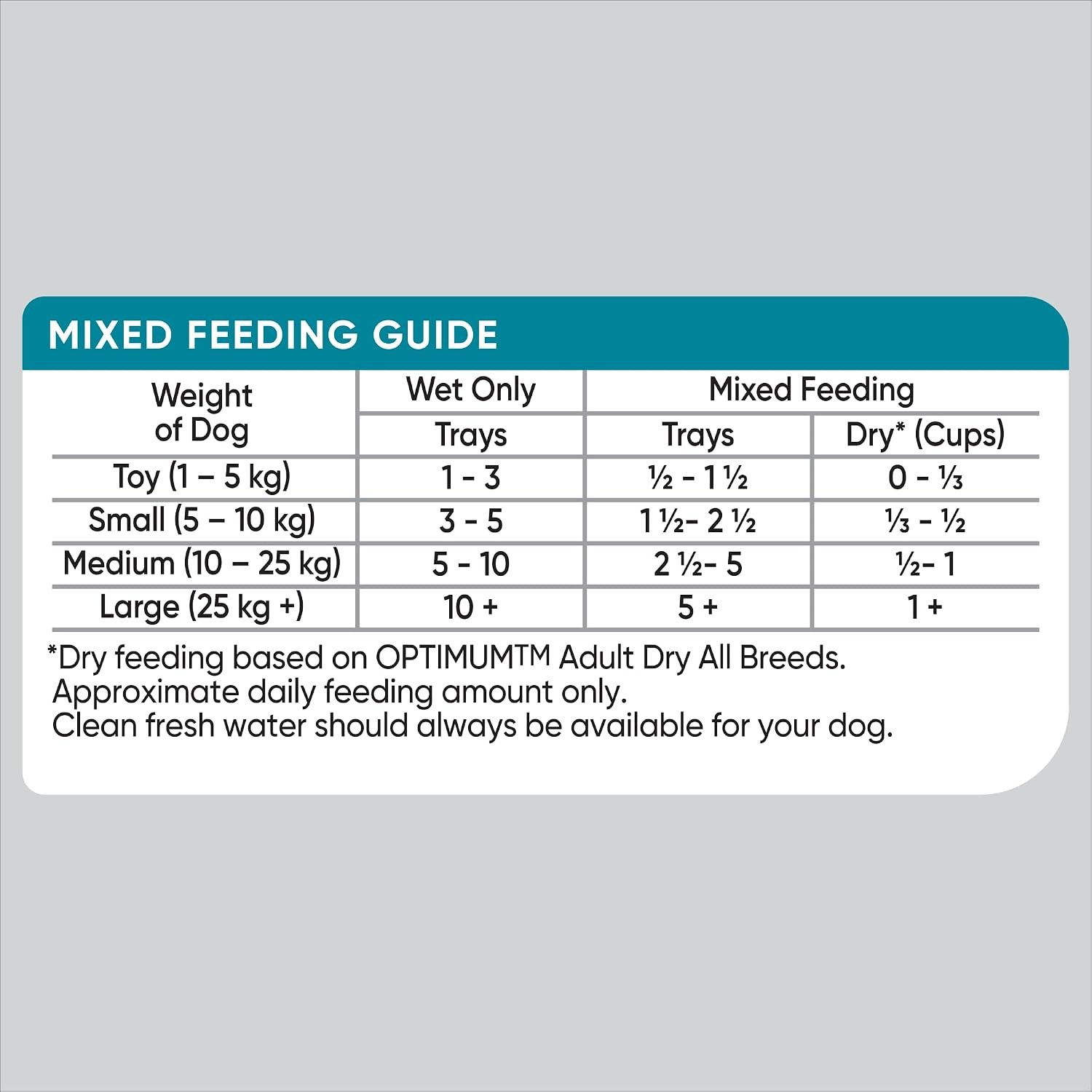
The feeding guide printed on the pack sets out portions by the dog's body weight. A small dog may be on part of a tray per meal. A large dog may be on several trays a day. Work out your dog's daily number of trays from the guide, then divide 36 by that figure.
One tray a day gives you 36 days. Two a day gives you 18. Three a day gives you twelve. That is the whole calculation, and it is worth doing before you order so you know whether you are buying a month's food or a fortnight's.
Working out the real cost
Pack sizes are designed to be hard to compare. Tins, pouches, trays and bags all come in different weights, and the shelf price tells you very little on its own.
The fix is cost per kilogram. Divide the box price by 3.6, because that is how many kilograms of food are in it. Now you have a number you can hold up against anything else, including dry food. People hunting for the best value wet dog food bulk buy often find the per-kilo figure tells a different story to the headline price.
One caveat. Wet food and dry food are not directly comparable per kilo, because wet food contains a lot of moisture. Compare wet to wet, and dry to dry, and you will get a fair picture.
Serving it as a meal or a mixer
The maker's directions cover both. You can serve the food as a complete meal on its own, or mix it with dry food.
The mixer approach is popular with older dogs who have gone off their kibble. A spoon or two of wet food stirred through the dry can make the bowl more interesting. If you do this, remember to reduce the dry portion so your dog is not quietly getting two dinners. The feeding guide on the pack is your reference point, and you adjust from there for your dog's size and activity level.
Some households split the difference. A tray in the morning, kibble at night. A tray used as a topper on weekdays and as a full meal on weekends. There is no single correct pattern, only the one that works in your house.
Changing foods without drama
The maker advises transitioning gradually if you are switching from another food. That is sensible advice and worth following.
A common approach is to spend about a week on the change. Start with a small proportion of the new food mixed into the old, then shift the ratio a little each day until you are fully across. If your dog seems unsettled at any point, slow down. There is no prize for rushing.
Keep fresh drinking water available throughout. The feeding directions say this explicitly, and it is easy to forget when you are focused on the food itself.
Storage, in practical terms
Unopened trays go in a cool, dry cupboard out of direct sunlight. Nothing fancy required. They are sealed, which is the point of the format.
Once you open a tray, the maker's directions say to refrigerate any unused portion. Cover it first. Follow any timing printed on the pack for how long an opened portion keeps, and if something looks or smells wrong, bin it rather than risk it.
Wash the bowl after each meal. Wet food residue is not pleasant left to dry, and a clean bowl is the simplest habit in dog ownership.
Check the date on the pack before you serve, especially near the end of a box that has been sitting for a few weeks.
Who the 36-tray box suits
It suits anyone who already knows their dog eats this kind of food and wants to stop buying it in dribs and drabs. It suits households with a small or medium dog, where 36 trays genuinely covers a long stretch. It suits people who like having a cupboard that is already stocked.
It is less suited to a first trial. If your dog has never had wet food, or is known to be particular, buying 36 trays at once is a gamble. Food is not something we can take back once it has been opened, so a smaller trial purchase elsewhere before committing to a bulk box is the cautious move.
It also suits anyone who has got tired of half-used tins. The best single serve dog food trays earn their place by removing a small daily annoyance, and once you have lived without the fridge clutter it is hard to go back.
When to ask a vet
Any question about your dog's health belongs with a vet, not with a product page. Weight, appetite changes, anything you have noticed about how your older dog is doing: those are veterinary conversations. A vet can also help you set portion sizes if the feeding guide on the pack leaves you unsure.
We can tell you what is in the box and what the maker prints on it. That is the honest limit of what a shop should be claiming.
The short version
This is 36 trays of 100 g chicken and rice wet food, 3.6 kg in total, labelled by the maker for senior dogs aged 7 and over and listed for all breed sizes. Serve it as a meal or mix it through dry food. Adjust the portion to your dog's size and activity level using the guide on the pack, keep fresh water down, refrigerate what you do not use, and change foods gradually over about a week.
Work out your cost per kilo by dividing the price by 3.6. Work out how long a box lasts by dividing 36 by your dog's daily tray count. Read the ingredient list against anything your dog reacts to, and take health questions to your vet.
Orders are dispatched within 2 working days and arrive within 7 working days by tracked courier, Australia only. Delivery is free over $99 and a flat $12 under that. Unopened packs can come back within 14 days for change of mind with return postage at your cost, and anything faulty, damaged or wrongly described is put right under the Australian Consumer Law.