

The complete guide
Goat Horn Dog Chews: A Practical Buyer's Guide
The problem with most chew purchases
Plenty of chew buying happens in a hurry. You are at the checkout, the dog has been restless all week, and you grab whatever is at eye level. Then you get home, read the back of the pack, and find a list of ingredients that runs to three lines of small print.
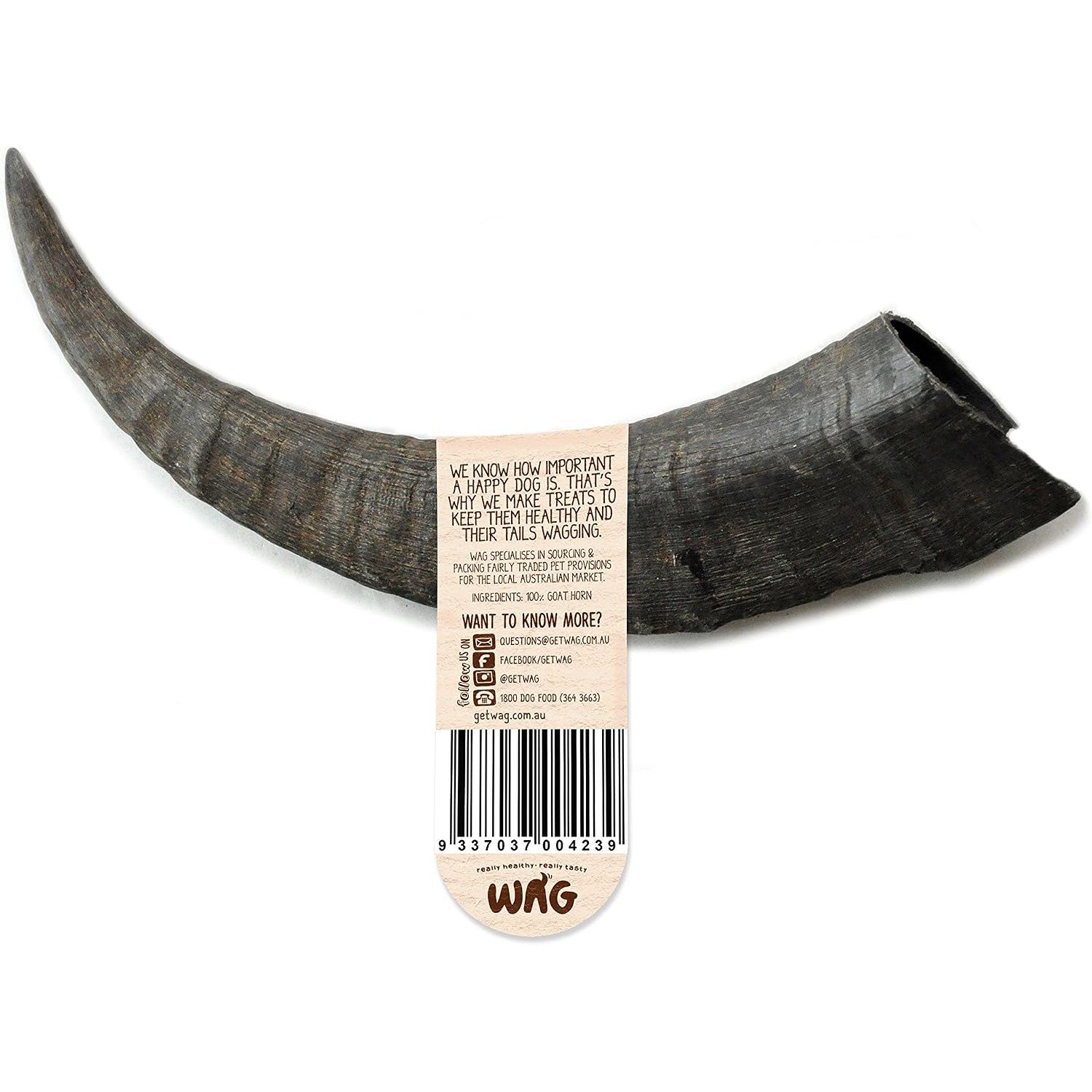
A whole goat horn sidesteps that. The ingredient list printed by the maker reads 100% goat horn. That is it. Whether that suits your particular dog is still a question worth asking your vet, but at least you are not trying to decode a paragraph of additives at the kitchen bench.
The other common problem is mismatch. A chew that is too soft for a determined chewer disappears in four minutes and you have spent money on nothing. One that is too large for a small dog just sits there, ignored, until it ends up under the couch. Getting the fit right matters more than almost anything else in this category.
What this product actually is
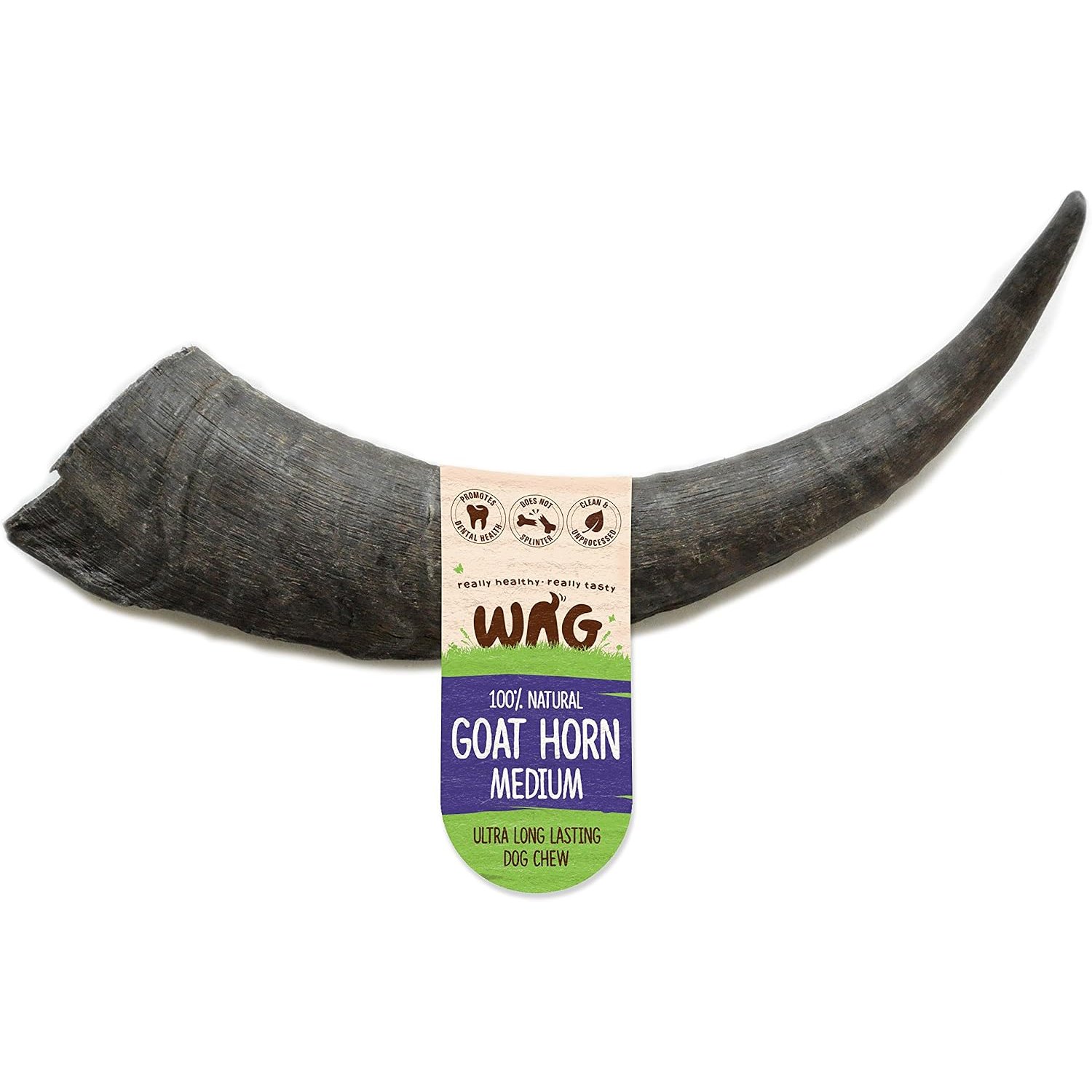
This is a Goat Horn Dog Chew in the maker's Medium size. Each pack holds one whole horn. It is not pressed, not moulded, not formed from offcuts. It is the horn itself, which means the shape you receive is whatever shape that horn happened to be.
The maker gives an approximate weight range of 85g to 115g for the Medium. That is a reasonable spread, and it exists because natural items are not uniform. Two horns can both sit inside that range and still look noticeably different side by side. One might have a pronounced curve, another might be close to straight. Colour varies too, from pale through to darker tones.
The product is labelled for adult dogs. The maker's pack statement says Medium horns are suitable for shapes and sizes from Chihuahua to Chow Chow, aged 6 months and up. That is a wide net, and it is worth reading carefully rather than skimming. Six months is the floor. Below that, this is not the product to reach for.
How you are meant to use it
The feeding directions are short and clear. The maker suggests treating your dog for up to 30 minutes a day, and doing it supervised.
Both halves of that matter. The 30 minute limit keeps a session contained, which stops the horn vanishing in one sitting and keeps chewing from becoming an all-day fixture. Supervision means you are in the room watching, not in the next room with the door shut. You want to see how the piece is wearing, how hard your dog is going at it, and whether they are working on it sensibly or trying to crack it in half.
A phone timer is the simplest tool here. Set it, let the dog settle, and when it goes off, trade the horn for something else and put it away. Dogs pick up routines fast, and most will stop protesting the swap after a handful of sessions if you are consistent about it.
Fresh water should be available the whole time, as it should be all day regardless.
Who the size suits
The weight range gives you something concrete to work with. Compare 85g to 115g against the chews your dog has handled before. If a chew of similar weight has lasted them several sessions, this one probably will too. If they have historically destroyed everything in that range inside an afternoon, expect the same here.
Breed is a rougher guide than chewing style. A small terrier with serious determination can outwork a large, lazy dog every time. Watch the first session and you will learn more about fit than any size chart can tell you.
One horn per pack also shapes how you plan. If you have two dogs, buy two packs and separate them during sessions. Sharing a single high-value item is how squabbles start, and it makes it much harder to keep an eye on each dog individually.
Reading the pack and checking against allergies
The printed ingredient list is the first thing to read, and here it is a single line. If your vet has given you a list of things to avoid, compare the two. Most of the time this takes a few seconds.
If you are not sure whether a hard chew suits your dog at all, that is a vet question rather than a label question. Age, dental history and individual habits all feed into it, and the person who has examined your dog is the one to ask.
Storage that actually keeps it usable
Store the horn somewhere cool and dry. A cupboard away from the stove and out of direct sun works fine. What you want to avoid is damp, because a horn that has been chewed and then sealed into a humid container will not be pleasant when you open it again.
If the horn gets wet, from rain, a water bowl or a rinse, let it air dry completely before putting it away. A quick rinse under cool water is fine if it has picked up garden dirt. Do not put it back in a sealed bag while it is still damp.
At the end of every session, pick the horn up and look at it. You are checking two things. First, has it worn down small enough that your dog could get the whole thing in their mouth? Second, has it split into sharp pieces? If either answer is yes, bin it. That habit takes five seconds and is the single most useful thing you can do with a hard chew.
Working out what it costs you
Cost per chew is a fair way to compare options, but it is slippery with natural items. You can divide the pack price by the stated weight range to get a rough cost per 100g, then scale from there. Because the actual horn might be at either end of 85g to 115g, treat that figure as a ballpark.
The more useful measure is how many sessions you get. If your dog's 30 minute sittings stretch across two weeks, the maths looks very different from a dog who finishes a horn in three sittings. You will only know after the first pack, which is one reason to start with one rather than ordering a case.
Delivery and returns
Orders are dispatched within 2 working days, then it is up to 7 working days by tracked courier. Delivery is Australia only. It is free on orders of $99 or more, and a flat $12 below that.
For change of mind, you have 14 days from delivery, provided the pack is unopened and still in its original sealed packaging. Return postage is paid by the customer. If something arrives faulty, damaged or not as described, that is put right under the Australian Consumer Law. There is no separate warranty on a chew product.
The short version
One whole horn per pack. The maker's Medium, roughly 85g to 115g. Ingredient list as printed reads 100% goat horn. Labelled for adult dogs, with the maker's pack statement setting the age at 6 months and up and the size range from Chihuahua to Chow Chow.
Use it for up to 30 minutes a day, supervised, exactly as the feeding directions say. Store it dry, check it at the end of each session, and throw it out once it gets small or splinters. Keep water available. And for anything about your dog's health or whether a hard chew is right for them, talk to your vet rather than guessing from a product page.