
The complete guide
Buying Wet Dog Food in Trays, A Practical Guide
The problem with feeding time
Feeding a dog should take thirty seconds. In practice it often does not. You are hunting for the scoop, the can opener has gone walkabout, there is half a tin in the fridge with cling film falling off it, and the dog is doing the thing where it stares at you and sighs. None of this is a crisis. It is just friction, repeated twice a day, every day, for years.
Single-serve trays exist to remove that friction. A tray is a portion. You peel it, tip it, and the bowl is full. There is no leftover to wrap, no scale to find, no guessing whether you gave the same amount this morning as you did yesterday. For a lot of households that small change is worth more than any clever feature on the label.
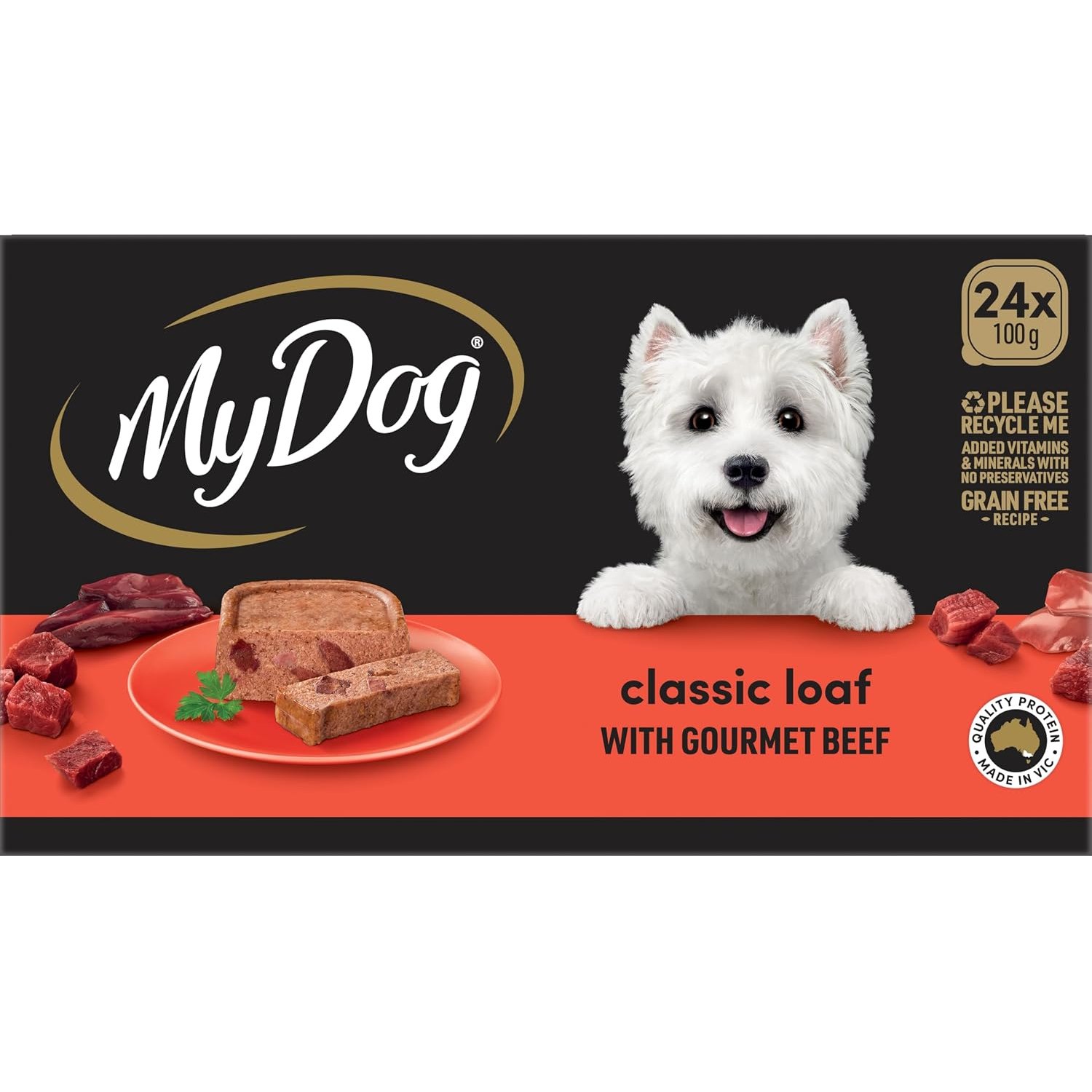
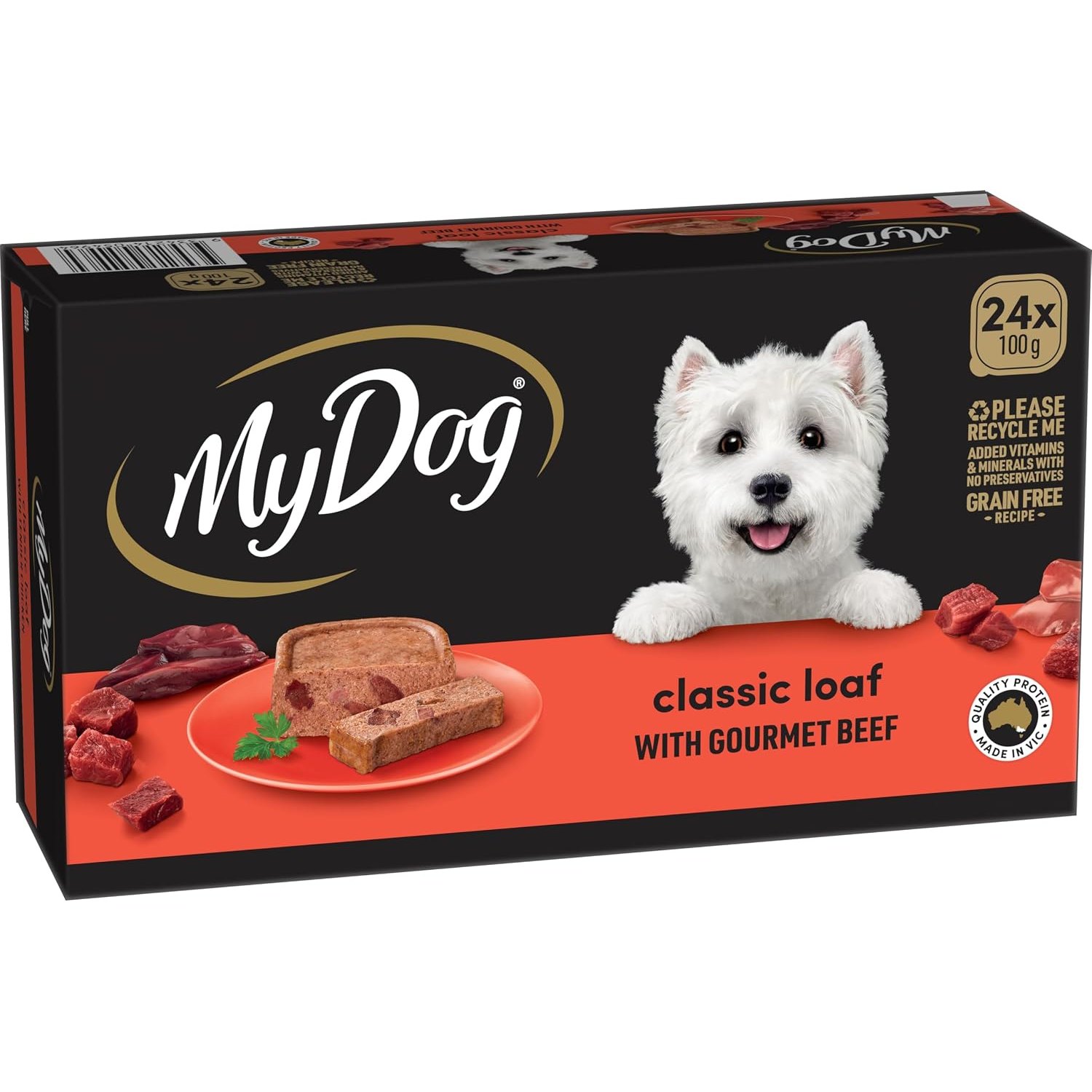
This pack holds 24 trays, each with 100 g of beef loaf, which comes to 2.4 kg of food in the box. It is listed for adult dogs of all breed sizes. The rest of this guide covers how to think about tray packs in general, how to work out whether this particular one suits your dog, and the practical bits around storage, switching foods and cost.
How tray packs actually work
A tray is a sealed plastic container with a peel-off lid. Inside is a set weight of food, here 100 g. The seal keeps the food stable at room temperature, which is why the maker's direction is simply to store at room temperature and serve as is. You do not refrigerate the unopened trays and you do not heat them.
The food in this pack is a loaf. Loaf means the food is set into a solid block rather than cut into chunks sitting in gravy or jelly. It holds its shape when you tip it out and it breaks up easily with a fork. Chunks-in-gravy products behave differently, with more liquid and more mess around the bowl. Neither is better in the abstract. It comes down to what your dog will eat and what you are happy to clean up.
Once a tray is opened, it behaves like any other opened wet food. Cover whatever is left, refrigerate it and use it soon, or discard it. Do not leave wet food sitting in a bowl all day. And keep fresh water down at all times, which matters whatever your dog eats.
Who a 24 tray pack suits
The honest answer is that it depends on the size of your dog, because that determines how fast you get through it.
A small dog eating around one tray a day will make this box last three weeks or so. That is a comfortable rhythm: one order covers most of a month. For people with one small or medium dog, a 24 pack is close to the sweet spot between buying often and clogging up the cupboard.
A large dog is a different story. A 100 g tray is a modest amount of food for a big animal, so trays are more likely to form part of a meal rather than all of it. Owners of larger dogs often use trays alongside another food, or buy two or three boxes at a time. If you are hunting for the best bulk wet dog food arrangement for a big dog, the maths on quantity matters more than it does for a terrier.
Multi-dog homes get through trays fast, which is fine, but worth planning for. And if your dog only eats wet food occasionally, as a topper over biscuits, a 24 pack will stretch a long way.
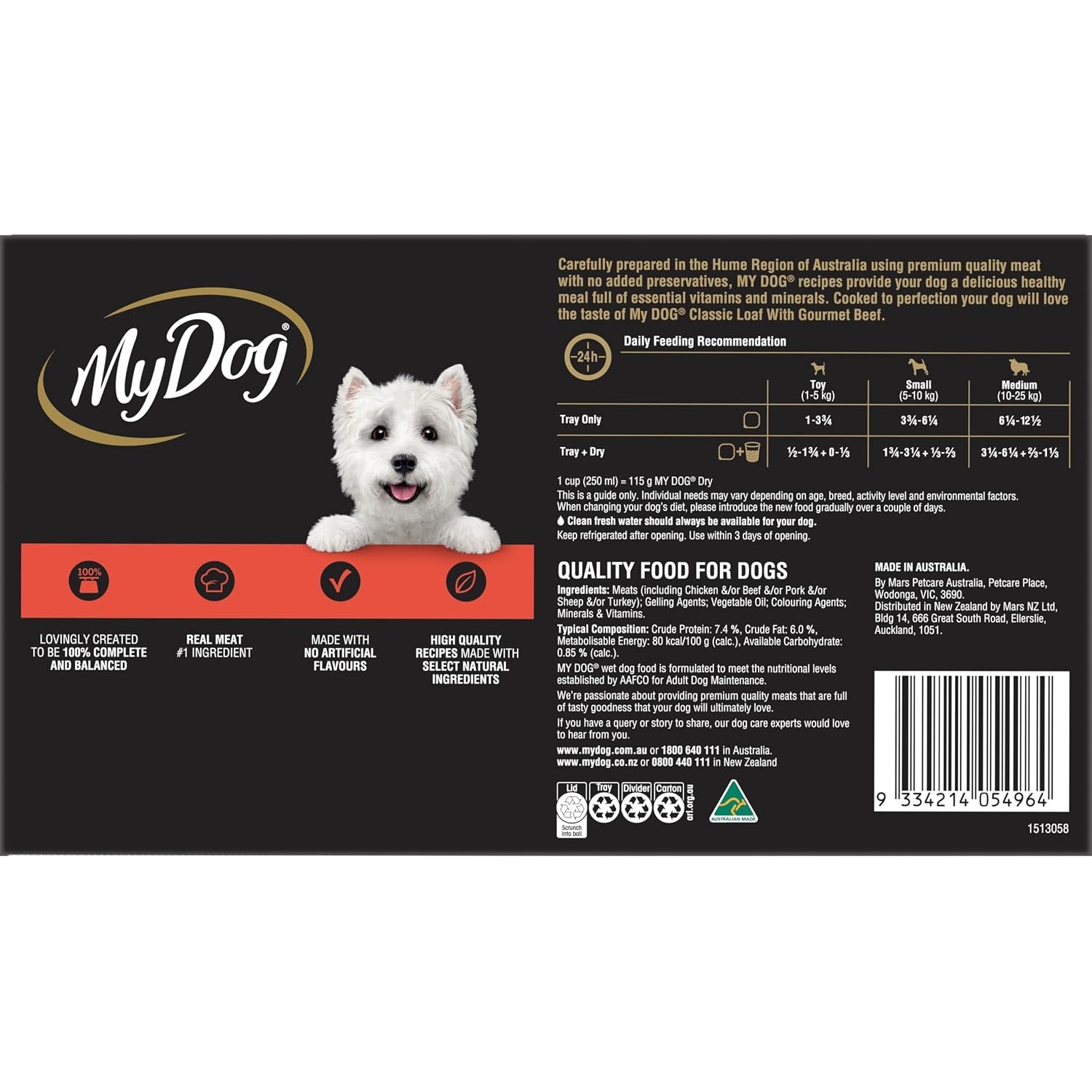
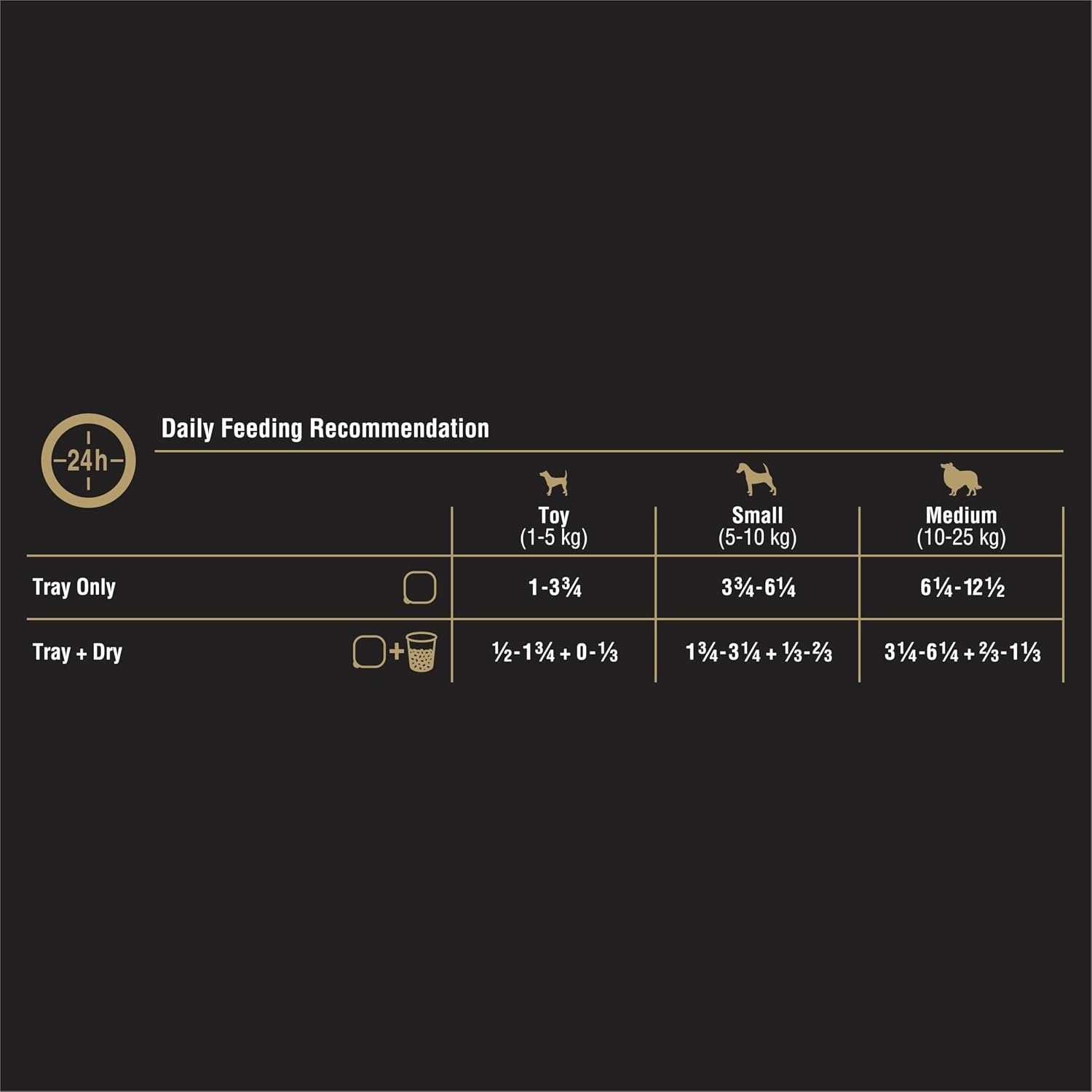
The number that settles all of this is the feeding guide printed on the pack. It gives amounts by bodyweight. Read it, compare it to your dog, and the rest is arithmetic.
Reading the ingredient list
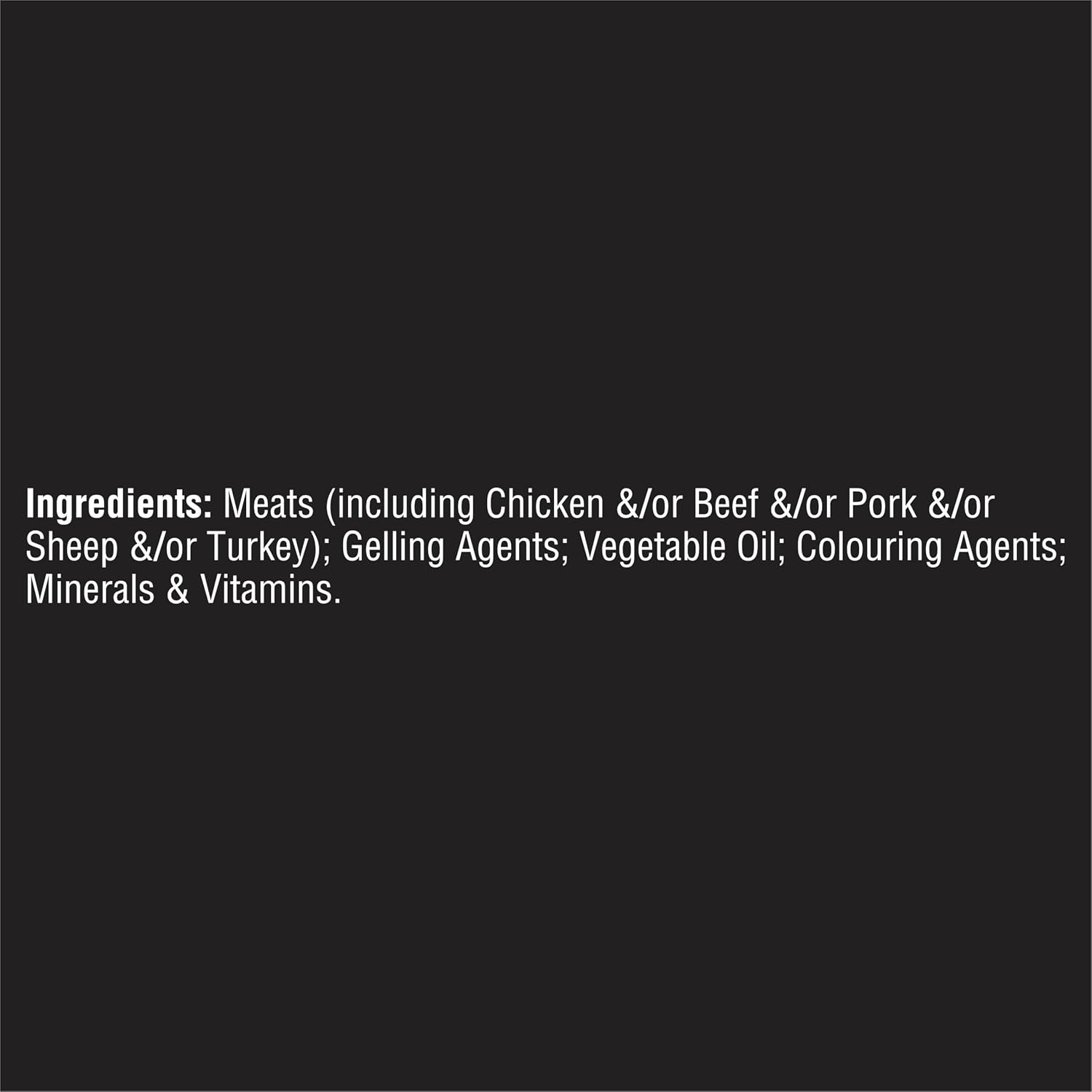
The ingredient list on this product, as printed by the maker, is: Meats (including Chicken &/or Beef &/or Pork &/or Sheep &/or Turkey), Gelling Agents, Vegetable Oil, Colouring Agents, Minerals & Vitamins. The pack also states it is made with no artificial flavours.
The "and/or" wording is common on wet dog food and worth understanding. It means the meat content may come from any of those listed animals, and the exact mix can vary between production runs. For most dogs this is not an issue. If your dog has a known reaction to a particular protein, though, an and/or list means you cannot be certain which one is in a given tray. That is a conversation to have with your vet before you commit to a 24 pack.
Beyond the ingredient line, we are not going to tell you what this food will do for your dog. Any question about diet, health or whether a particular food suits a particular animal belongs with a vet who has actually seen the dog.
Switching foods without drama
If your dog is currently eating something else, change over gradually. The usual approach is about a week. Day one and two, a small amount of the new food mixed into a bowl of the old. Day three and four, closer to half and half. By the end of the week you are on the new food entirely.
Some dogs will happily eat anything put in front of them and the slow change is unnecessary. Others are more sensitive to a sudden switch. Going slowly costs you nothing and avoids finding out the hard way.
Fussy eaters sometimes need a nudge with texture rather than flavour. A dog used to dry biscuits may take a few meals to decide a soft loaf is food. Mixing a spoonful through the usual meal for a couple of days often does the trick. This is also how a lot of people land on using wet food as a topper permanently rather than as the whole meal.
Working out what you are actually paying
Price per pack tells you very little. Price per kilo tells you everything.
This pack contains 2.4 kg of food. Divide the price by 2.4 and you have a number you can hold up against cans, pouches, other tray packs, anything. Do the same sum on whatever you currently buy and you will know within a minute whether a change is worth making.
Then factor in the bit the maths misses. A multipack saves trips. It means you do not run out on a Sunday night. It means the dog's food is one less thing on the list. Some people will pay a little more per kilo for that, and that is a reasonable trade, as long as you know you are making it.
Storage, care and the small stuff
Keep unopened trays in a dry cupboard at room temperature, out of direct sunlight, and do not stack heavy things on top of them so the seals stay intact. Check the best before date before you serve. Wash the bowl after every meal, and refresh the water daily.
Trays stack flat, which is one of their quiet advantages over cans. Twenty-four of them take up a manageable shelf. They also travel well, since nothing needs refrigerating until it is opened. A few trays in a bag covers a weekend away or a stay at a family member's house without any faffing about with scoops and containers.
The short version
This is 24 trays of beef loaf wet dog food, 100 g each, 2.4 kg in the box, listed for adult dogs of all breed sizes. The maker's direction is to serve as is and store at room temperature, and the full ingredient list is printed in the specifications above.
Work out how many trays a day your dog needs from the feeding guide on the pack, divide 24 by that number, and you will know how long a box lasts. Divide the price by 2.4 for your cost per kilo. Switch over slowly if your dog is eating something else now, keep fresh water down, and check the ingredient line against anything your dog is known to react to.
Orders are dispatched within 2 working days and arrive within 7 working days by tracked courier, Australia only. Delivery is free over $99 and a flat $12 under that. Change of mind returns are accepted within 14 days if the pack is unopened and still sealed, with return postage paid by you. Anything faulty, damaged or not as described is put right under the Australian Consumer Law.