
The complete guide
Choosing a Senior Dry Dog Food, A Practical Buyer's Guide
The problem with feeding an older dog
Dogs slow down. The walks get shorter, the naps get longer, and at some point the bag of food you have been buying since they were two no longer feels like the right fit. That is usually when owners start looking at senior formulas, and it is also when the shopping gets confusing. There are dozens of bags on the shelf, the labels all look similar, and the prices jump around depending on bag size rather than quality.
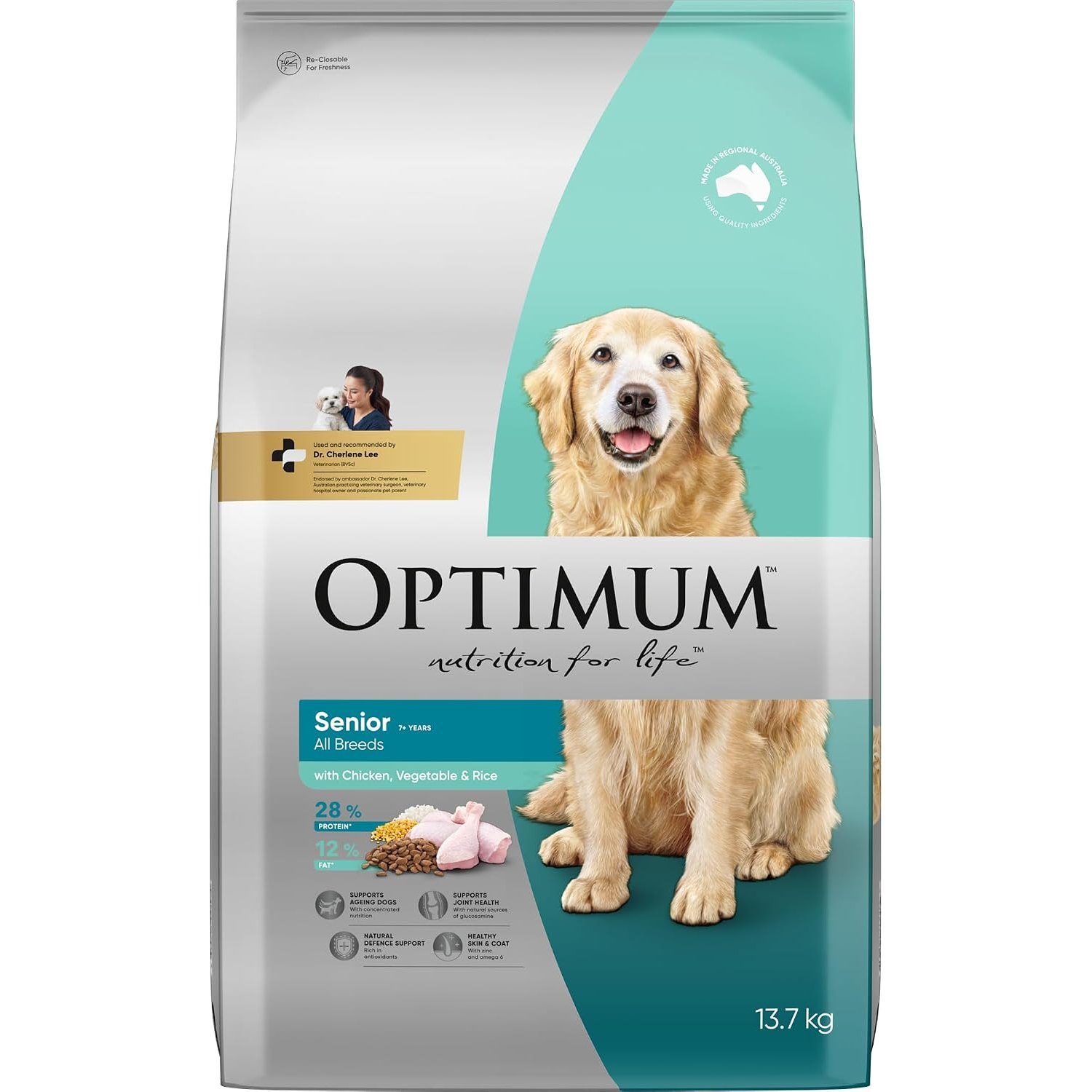
Chicken, Vegetables & Rice Senior Dry Dog Food 13.7 kg keeps that decision fairly simple. It is a dry kibble, it is made for the senior life stage, and it is listed as suitable for all breed sizes. One bag, 13.7 kg, chicken with vegetables and rice. There is no small-breed and large-breed split to puzzle over, and no mixing and matching of formats.
This guide walks through what a bag this size actually means day to day, how to read the feeding directions properly, how to store a large bag so the last scoop is as good as the first, and how to compare it fairly against other options.
What you are actually buying
The form is dry kibble. That matters more than people expect. Dry food is easy to measure, it does not need refrigeration once opened, and it keeps well if you store it properly. It is also easier to leave with a pet sitter, since the instructions come down to "one cup, twice a day" rather than a fridge full of opened trays.
The pack is one 13.7 kg bag. That is a substantial amount of food. For a small dog it could last months. For a big dog it might be a few weeks. Either way, it is a buy-once-and-forget purchase rather than a weekly top-up, which is the main reason owners go looking for bulk senior dog food in the first place.
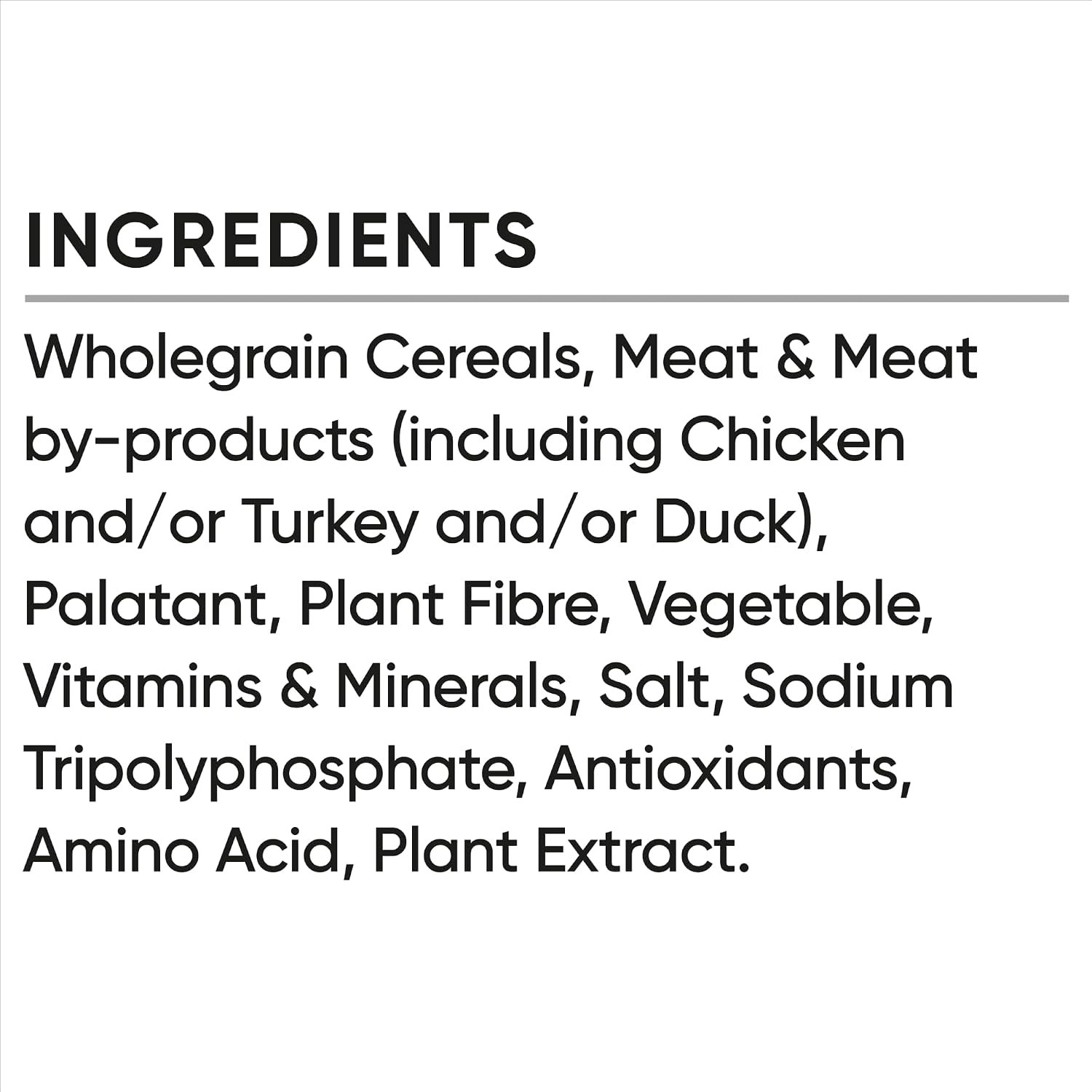
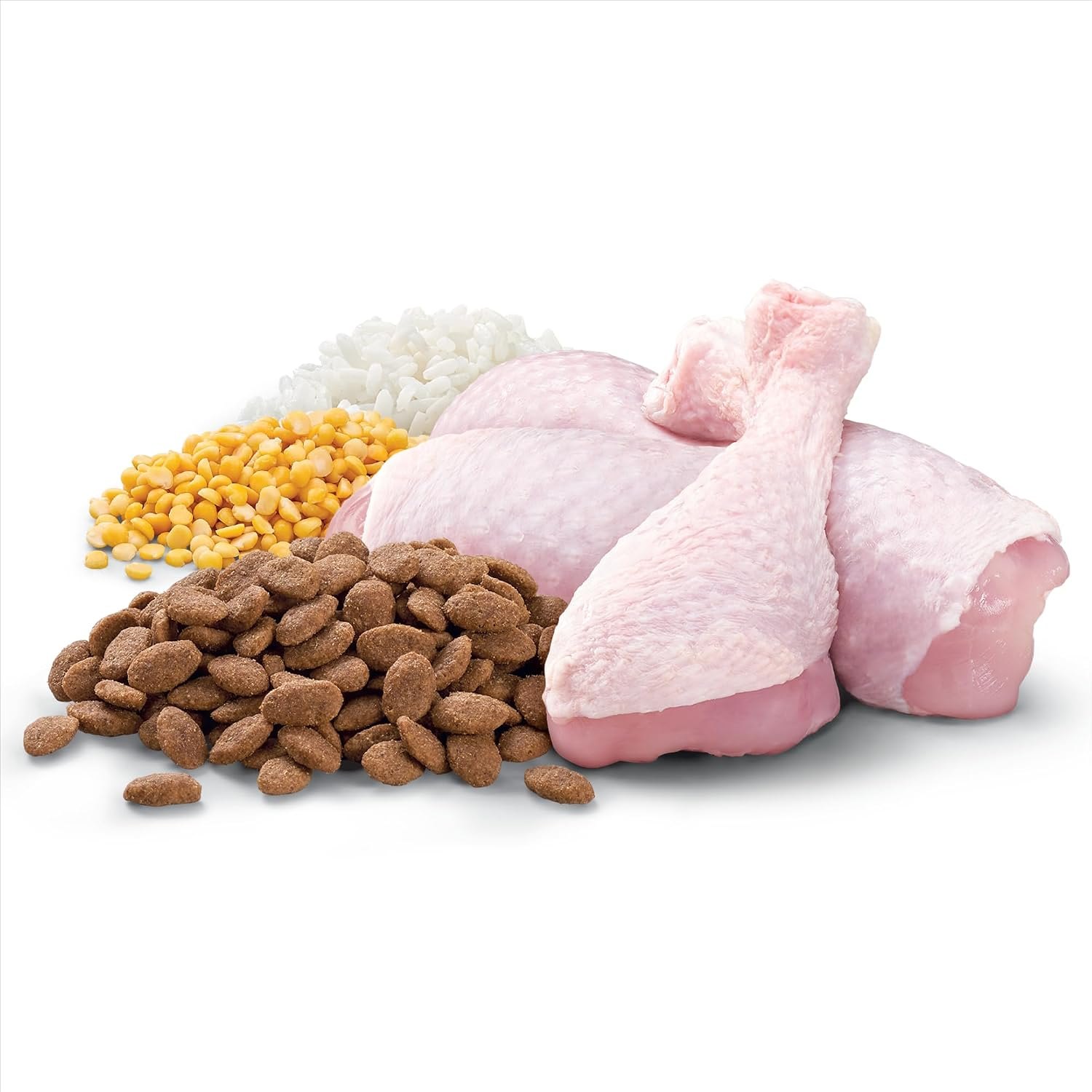
The maker prints the ingredient list in full, and it is worth reading before you buy rather than after. It begins with poultry and poultry by-products, then sorghum and/or rice and/or wheat, barley and/or corn, cereal protein, chicken digest, beet pulp and vegetables. After that come salt, a mineral group (potassium chloride, zinc sulphate, ferrous sulphate, copper sulphate, manganese sulphate, potassium iodide and selenium), vegetable oil, sodium tripolyphosphate, a vitamin group (A, B1, B2, B3, B5, B6, B9, B12, C, D, E and choline) and antioxidants.
If your dog has a known sensitivity to any of those ingredients, that list is your first checkpoint. And if you are trying to work out whether a particular ingredient suits your dog's situation, that is a conversation for your vet, not a product page.
Who a 13.7 kg bag suits
Big bags suit a few specific households.
The first is anyone with a large or giant breed. A big dog eats a lot, and a small bag turns into a weekly errand. Buying in bulk cuts that down to a couple of trips a year.
The second is a multi-dog home. If you have two or three older dogs eating the same food, a 13.7 kg bag disappears faster than you would think, and the per-kilo saving adds up.
The third is anyone who lives a long way from a decent pet shop. If a restock means a 40 minute drive, buying a big bag delivered to the door is simply less hassle.
Who it suits less well: a single small dog in a tiny flat with nowhere cool and dry to keep the bag. If it will take you five or six months to get through 13.7 kg and the only storage spot is a hot laundry cupboard, a smaller pack is the sensible call.
Reading the feeding guide properly
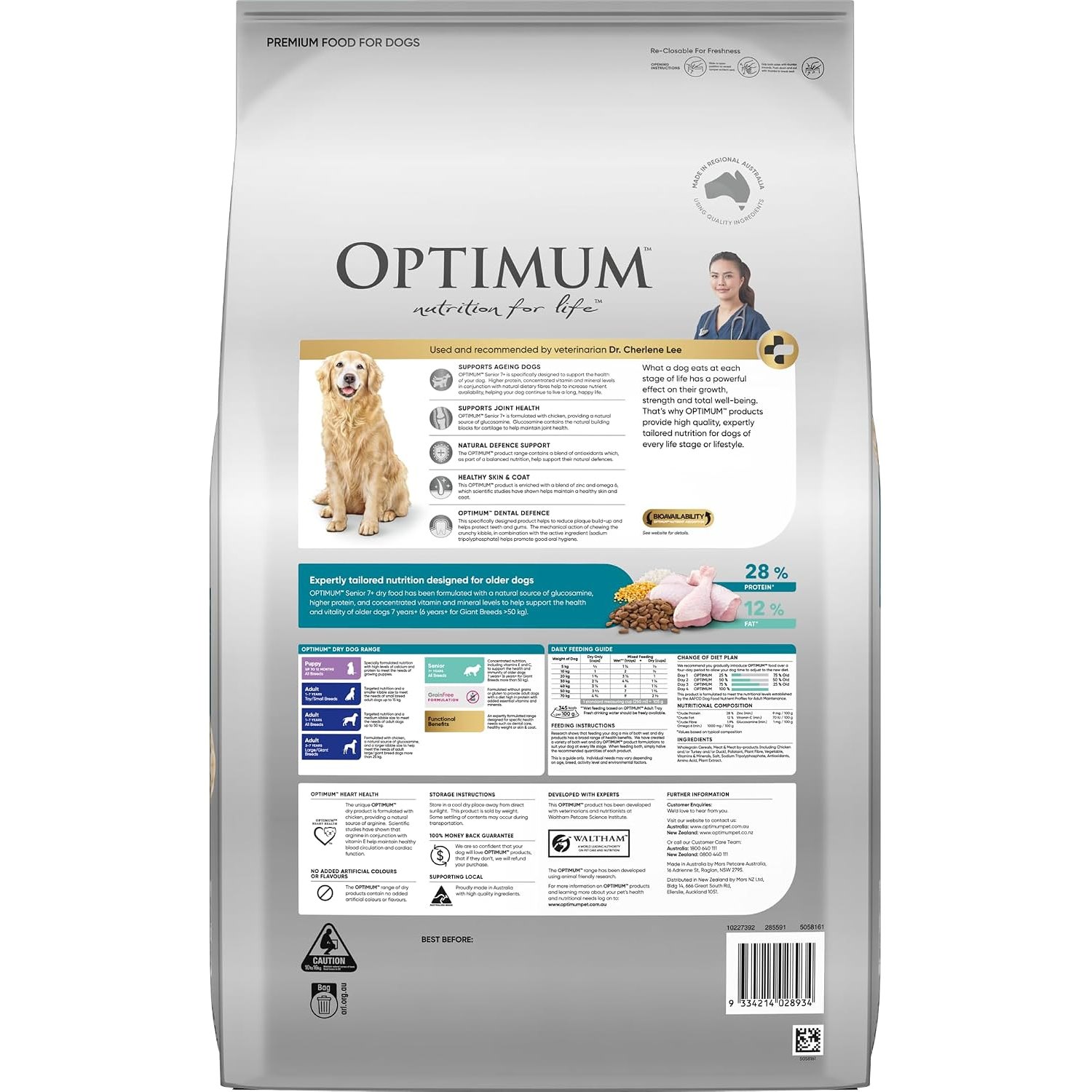
The feeding directions printed on the pack are the starting point for every portion decision. The maker is clear that they are a guide only, because individual needs vary with age, breed, activity level and environmental factors. A nine-year-old kelpie still working a paddock and a nine-year-old pug who does one lap of the block are both senior dogs, and they do not eat the same amount.
There is one specific instruction worth noting. If you feed both a dry and a wet product, you halve the recommended quantity of each. That is the maker's own direction, and it prevents the common mistake of feeding a full serve of kibble plus a full tray of wet food and wondering why the portions have crept up.
Use a proper measuring cup or, better, kitchen scales. Eyeballing a scoop is how portions drift over months. Weigh it once, mark the level on your scoop, and you can go back to eyeballing with some confidence.
Working out what it really costs
Bag prices are hard to compare because bag sizes differ. The fix is simple arithmetic. Divide the price by the weight in kilograms, and you get a per-kilo number that works across every product on the shelf.
For this one, divide the price you pay by 13.7. Then do the same for the 3 kg bag you have been buying and compare. You will often find the big bag wins by a decent margin, which is the whole point of buying the best dry dog food for older dogs in a larger format.
The other number worth knowing is cost per day. Take your dog's daily gram amount from the feeding guide, divide 1,000 by it to get servings per kilogram, then work back to a daily figure. Once you know what a day of food costs, budgeting gets a lot easier.
Storing a large bag well
Dry kibble is tough but not indestructible. Heat, damp, sunlight and air all work against it over time, and a bag that takes two months to finish needs a bit more care than one you empty in a week.
Keep the bag sealed between meals. A simple bag clip after rolling the top down does the job. A lot of owners prefer to tip the kibble into a lidded bin, which is tidier and keeps pests out, and that is fine as long as the bin is clean and completely dry before you fill it.
If you do decant, keep the original bag. It carries the feeding guide, the full ingredient list and the batch details, and you will want all three at some point.
Store the bag somewhere cool and dark. A pantry or a cool garage shelf is ideal. Avoid spots next to a hot water system, a sunny window or a damp wall. Wash food bowls regularly, and always keep fresh water available.
Changing foods without drama
Dogs do not love sudden change, and older dogs often less so. If you are switching from another food, take about a week over it. Start with a small amount of the new kibble mixed into the old, then shift the ratio a little further each day until you are fully across.
Watch your dog through the changeover. If anything seems off, slow the transition down or stop and speak to your vet. There is no prize for rushing it.
Comparing options fairly
When you are weighing up several bags, keep the comparison to things you can actually verify. Life stage, breed size, form, flavour, pack size and the printed ingredient list are all on the label. Compare those directly.
Be more careful with the claims that are harder to check. A lot of pet food marketing leans on words that sound meaningful but are not defined anywhere. The label facts are what you can rely on.
And for anything to do with your individual dog's health, diet or weight, ask your vet. They know your dog. A product page does not.
The short version
Chicken, Vegetables & Rice Senior Dry Dog Food 13.7 kg is a straightforward option: dry kibble, senior life stage, all breed sizes, chicken with vegetables and rice, one large bag. The ingredient list is printed in full above, so you can check it against anything your dog cannot have.
Work out your dog's daily portion from the feeding guide on the pack, halve both quantities if you also feed a wet food, store the bag cool and sealed, and change over gradually if you are switching. Keep water available at all times, and take any health question to your vet.
Orders are dispatched within 2 working days and arrive in up to 7 working days by tracked courier, Australia only. Delivery is free on orders of $99 or more, and a flat $12 under that. Change of mind returns are accepted within 14 days of delivery if the pack is unopened and in its original sealed packaging, with return postage paid by you. Faulty, damaged or wrongly described goods are put right under the Australian Consumer Law.