
The complete guide
Buying Kangaroo Dry Dog Food, a Practical Guide to the 6 kg Bag
The problem with buying dog food online
Standing in front of a wall of dog food, online or in a shop, is genuinely confusing. Bags shout about things you cannot verify, sizes do not line up, and the price on the front tells you very little until you do the maths. Meanwhile your dog just wants dinner at the usual time.
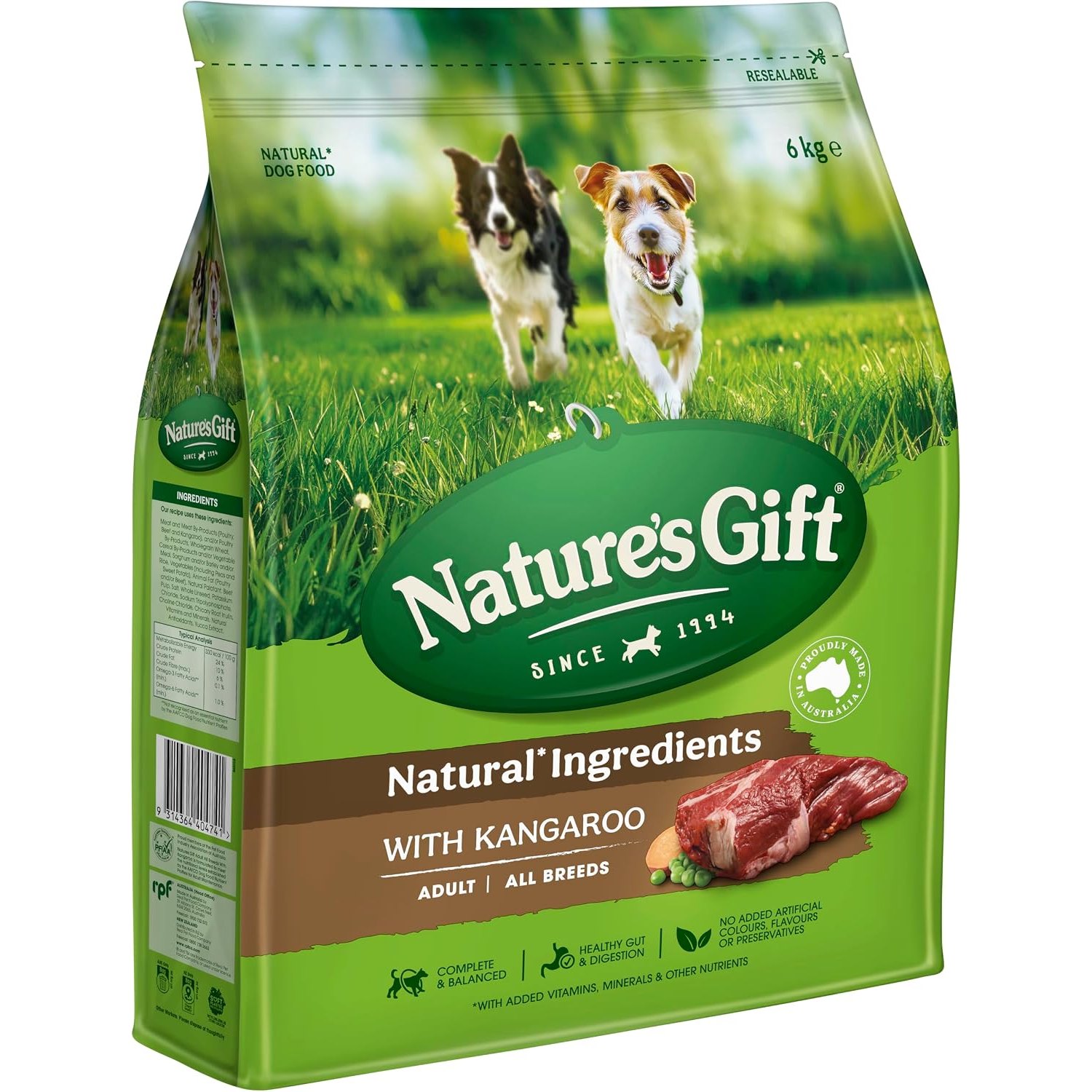
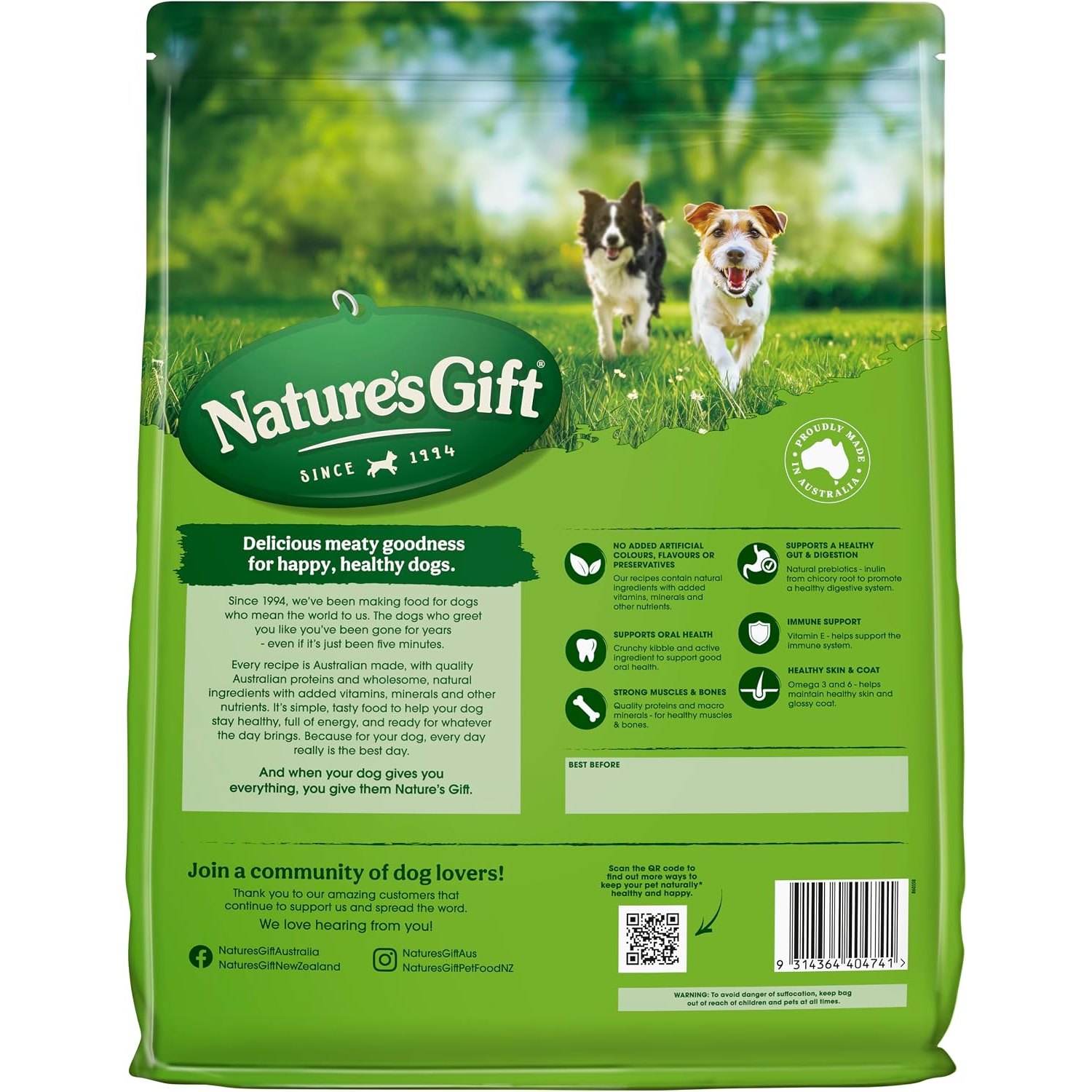
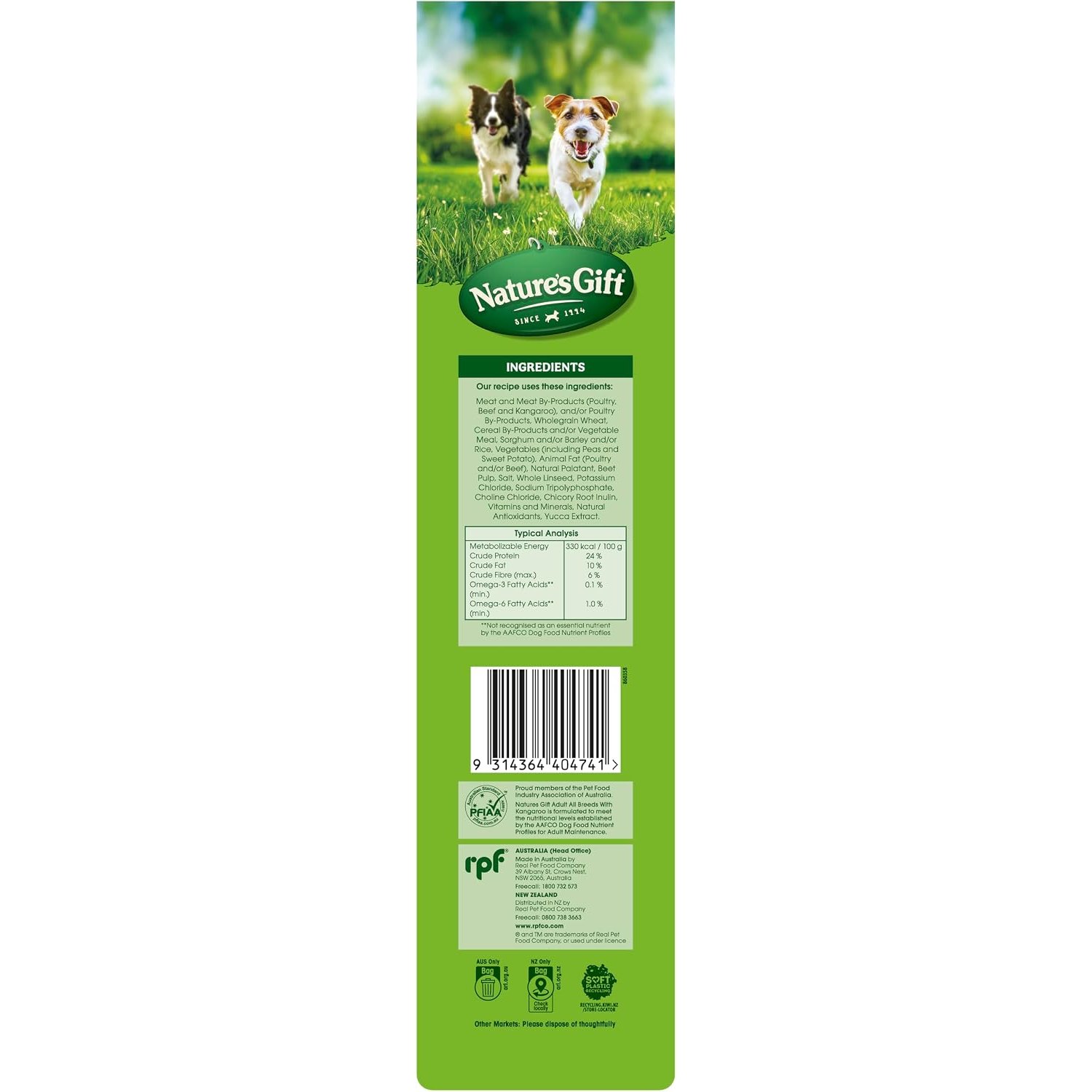
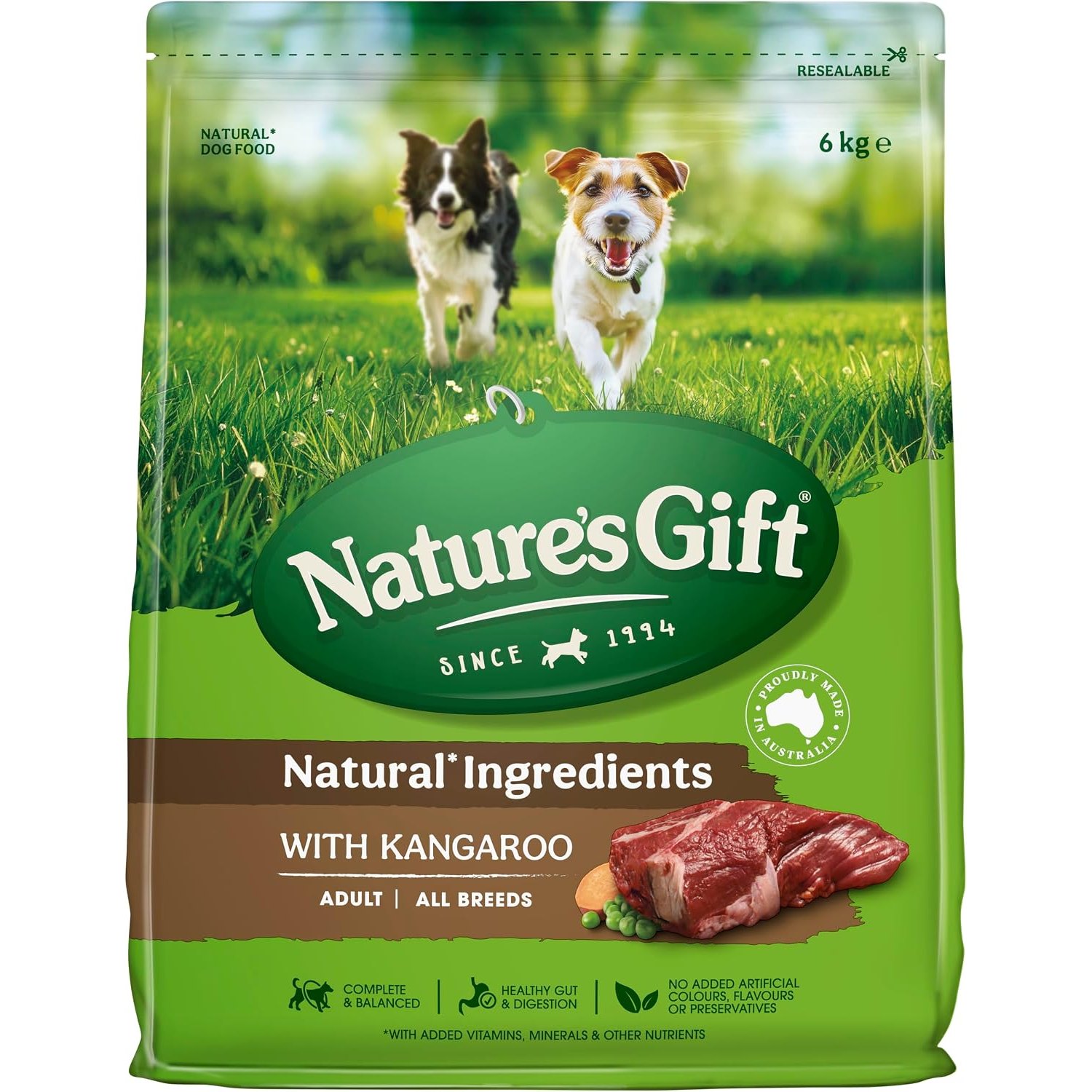
This guide keeps to what is actually on the pack information for Kangaroo Adult Dry Dog Food 6 kg, and then covers the practical side of buying, storing and serving dry food. The product itself is straightforward. It is dry kibble, the protein named on it is kangaroo, it is intended for the adult life stage, and it comes as one 6 kg bag. Everything else about the recipe, including the complete ingredient list, is printed on the pack. We do not hold that list, so we are not going to guess at it.
What this food actually is
Dry kibble is food that has been formed into small dry pieces. It is shelf stable, it does not need refrigeration, and you can measure it accurately with a cup or a set of kitchen scales. That makes it the easiest form to portion consistently, which matters more than most people expect.
The life stage on this food is adult. Life stage is simply the maker's way of saying who the food is aimed at. Adult means dogs that have finished growing, as opposed to puppies. If you are not sure which stage your dog is at, breed and age both play a part, and your vet can tell you in about ten seconds.
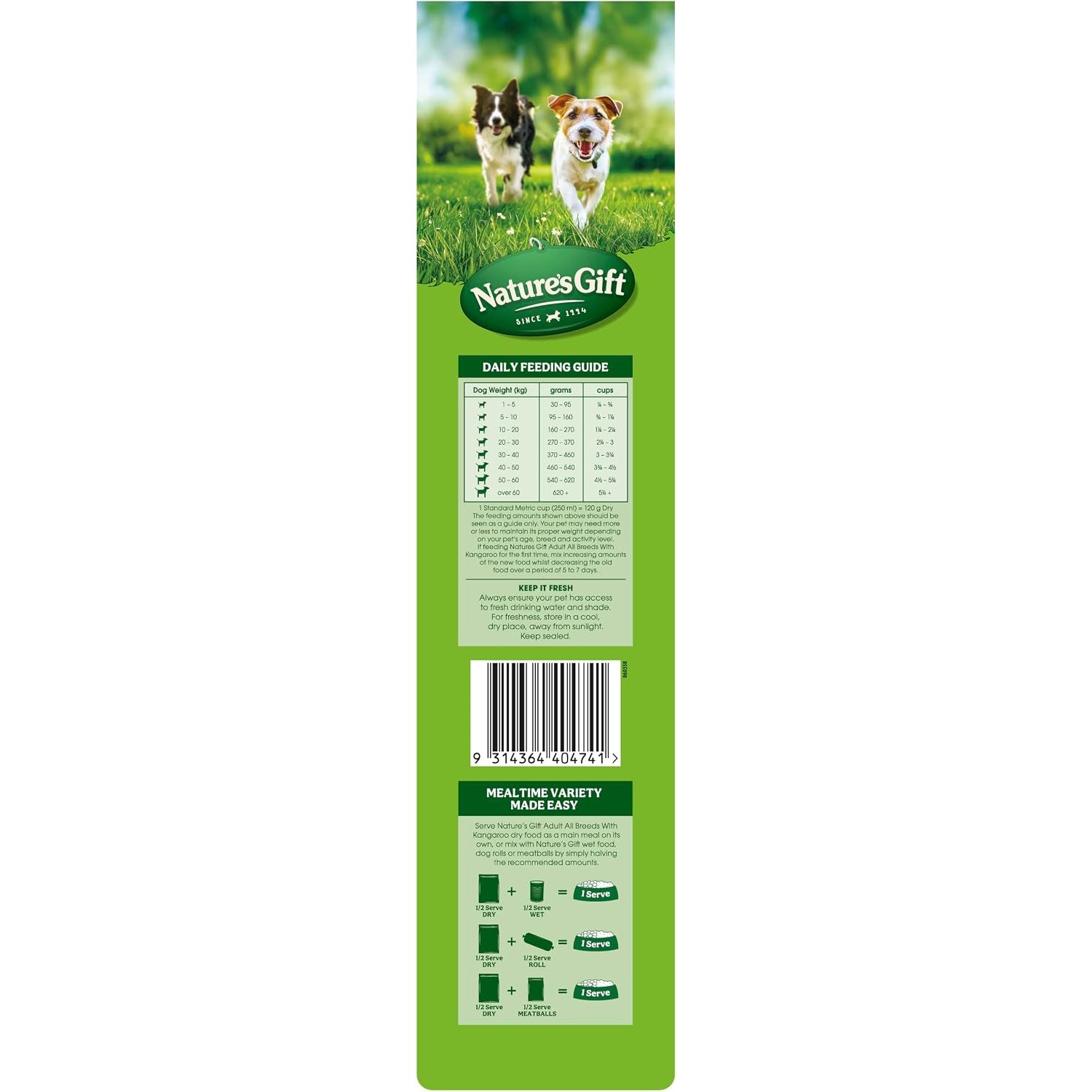
Breed size is not stated on the pack details we hold. That is not unusual. Many feeding guides work from the dog's body weight rather than a breed-size label, which is more precise anyway. When the bag arrives, the feeding directions printed on it are your reference point.
The protein named here is kangaroo. People shopping for the best novel protein dog food often start by looking at what the headline protein is, then read the full label to see what else is in there. Do that second step. The label on the bag is the only complete and accurate source.
Why pack size matters more than you think
Six kilograms is a sensible middle size. It is heavier than a trial bag, so you are not reordering every fortnight, but it is still light enough to carry from the front door to the cupboard without a struggle.
How long a 6 kg bag lasts comes down to one number: your dog's daily portion. That number is on the pack. Once you have it, the arithmetic is quick. Divide 6,000 grams by the daily amount in grams. A dog eating 150 g a day gets roughly 40 days from the bag. A dog eating 300 g a day gets about 20. Knowing that figure before you buy stops you from either running out mid-week or sitting on a bag that goes stale.
There is a freshness angle too. A bag that takes four months to finish has been open a long time. For a small dog, buying smaller and more often can make more sense than chasing the best bulk dog food bag deal. For a household with two or three dogs, the opposite is true.
Working out whether the price is fair
The front-of-bag price is close to meaningless on its own, because bags come in different sizes. Cost per kilo is the comparison that works. Take the price, divide it by 6, and you have a number you can line up against any other bag, whatever its size.
Then add the thing most people forget, which is how much your dog actually eats of it. Two foods with the same cost per kilo can cost quite different amounts per month if their feeding guides recommend different daily amounts. Compare cost per day rather than cost per kilo if you want to be thorough. Price per day is the number that hits your bank account.
Finally, factor in delivery. Free delivery on orders of $99 or more, and a flat $12 under that, changes the maths on a single bag versus two.
Reading the pack when it arrives
Before you tip anything into a bowl, read two things on the bag.
The first is the ingredient list. If your dog has sensitivities, or your vet has asked you to avoid something specific, this is where you confirm it. Ingredients are usually listed in order of quantity, so the first few entries tell you most of the story. This is the step to take if you are comparing what you have bought against what you were hoping for.
The second is the feeding directions. They tell you the daily amount by dog weight, and often how to split it across meals. Weigh the portion the first few times rather than eyeballing it. Most people are surprised at how far off a casual scoop can be.
Also check the use-by or best-before date, and keep the bag or note the batch code somewhere. If you ever need to raise a question about a specific bag, that code is what identifies it.
Switching foods without drama
If your dog is currently on something else, change over gradually. About a week is the usual approach. Start with mostly the old food and a small share of the new, then shift the ratio a little each day until you are on the new food entirely.
A slow change gives your dog time to get used to the new food. It also gives you time to notice if something is not agreeing with them, with a smaller amount of new food involved. If anything seems off, slow the change down or pause it, and talk to your vet.
Some dogs are suspicious of anything new for the first day or two. Serving at the usual time, in the usual bowl, in the usual spot, helps. So does not making a fuss about it.
Storing kibble properly
Dry food is easy to store badly. The two enemies are moisture and warmth. The maker's direction is to keep this food in a cool, dry place, which rules out the garage in summer and anywhere near a dishwasher or a sunny window.
The simplest approach is to roll the top of the bag down tightly and clip it after every meal. If you prefer a container, put the whole bag inside it rather than tipping the kibble in loose. That keeps the printed feeding guide, the use-by date and the batch code with the food, and it saves you washing out the container between bags. If you do tip kibble straight in, wash and dry the container properly before each refill.
Use a dedicated scoop and keep it out of the bag between meals, where it can pick up moisture from the air.
Feeding day to day
Keep fresh water available at all times. That is true with any dry food and it is not a detail worth skipping.
Wash bowls regularly rather than topping them up. A quick wash with the rest of the dishes is enough. If you feed in two meals, measure out the full daily amount in the morning and split it, so the total stays right even on busy days.
If you use some of the kibble as training rewards, take it from the daily total rather than adding it on top. It is a tidy habit and it keeps portions honest.
Who this suits
This food makes sense if you have an adult dog, you want a dry kibble with kangaroo as the named protein, and a 6 kg bag fits your storage and your reordering rhythm. It is a reasonable pick if you have been searching for the best kangaroo dry dog food and want a mid-size bag rather than a sack.
It may not suit you if you have a puppy, if you need a very large bulk pack, or if your vet has put your dog on a specific prescribed diet. For any health question at all, including allergies, weight or anything that seems wrong with your dog, your vet is the right person to ask. We sell food, not advice.
Delivery, returns and the fine print
Orders are dispatched within 2 working days. After that, allow up to 7 working days by tracked courier. Delivery is within Australia only. Shipping is free on orders of $99 or more, and a flat $12 below that.
Change-of-mind returns are accepted within 14 days from delivery, provided the pack is unopened and in its original sealed packaging, with return postage paid by you. Opened food bags cannot be taken back. If goods arrive faulty, damaged or not as described, they are put right under the Australian Consumer Law. There is no separate warranty on food.
The short version
Kangaroo Adult Dry Dog Food 6 kg is a dry kibble for adult dogs, with kangaroo as the named protein, sold as a single 6 kg bag. Read the ingredient list and the feeding directions printed on the pack before the first meal. Work out your dog's daily portion, divide 6,000 by it, and you will know how long the bag lasts and what it costs per day. Store it cool and dry, switch over across about a week, keep water available, and ask your vet about anything health related.