
The complete guide
Choosing Grain Free Puppy Food, A Practical Buyer's Guide
The problem with the puppy food aisle
Standing in front of a wall of dog food with a new puppy at home is genuinely confusing. Every bag is covered in words, half of them mean nothing, and the price per kilo swings wildly between the small packs and the sacks. Meanwhile your puppy is downstairs chewing a table leg and you just want to make a decent decision and move on.
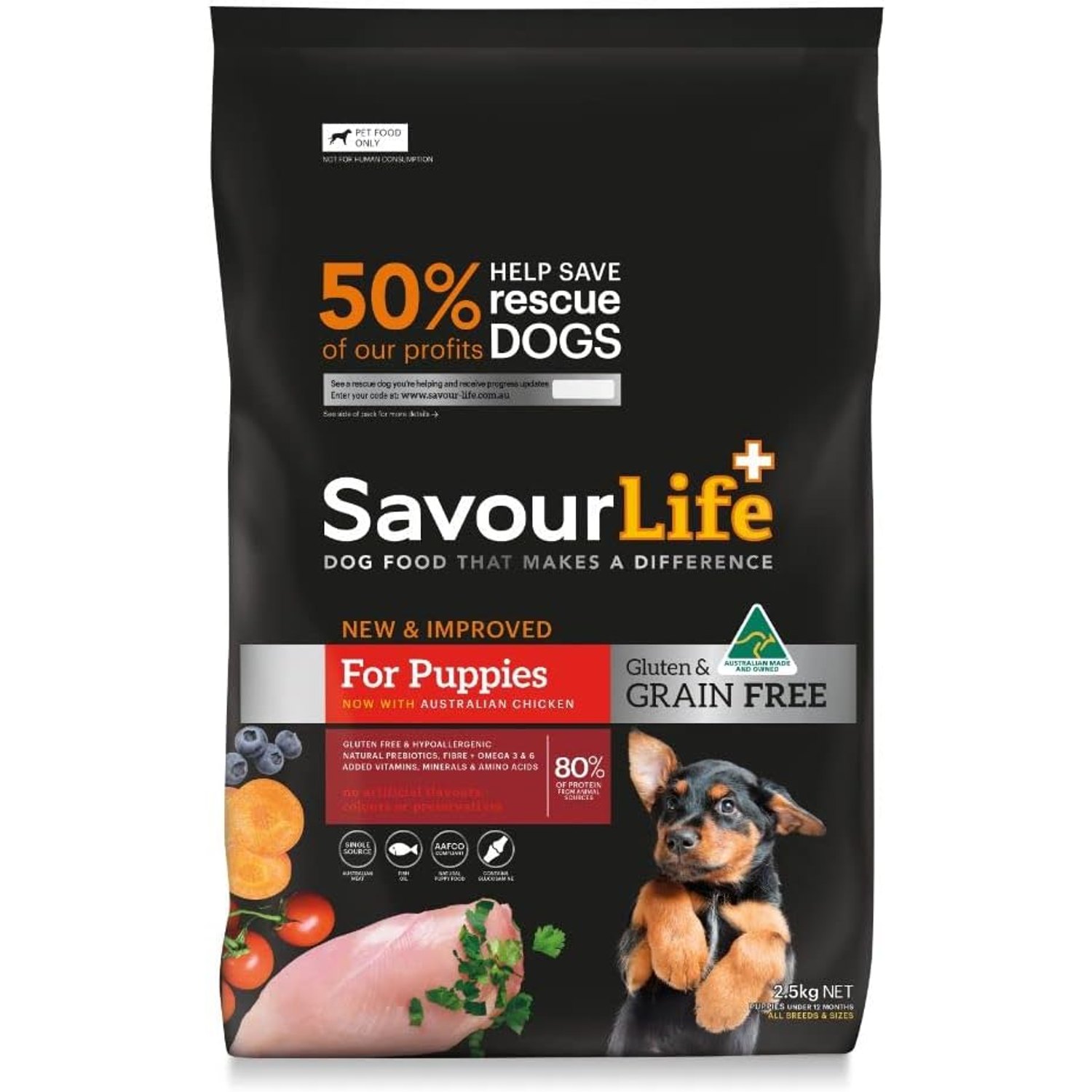
This guide is about one specific product, Grain Free Chicken Puppy Food 2.5 kg, and more broadly about how to read any bag of dry food without getting talked into things. We will stick to what is actually printed, because that is all anyone can honestly go on.
What this food actually is
It is a dry kibble. The life stage on the pack is puppy. The protein or flavour is chicken, and the maker labels the recipe grain free. It comes as a single 2.5 kg bag.
The ingredient list, printed by the maker, reads Chicken Meal, Field Peas, Poultry Oil, Tapioca, Natural Flavouring, Beet Pulp, Potato, Fish Oil, Vitamins & Minerals & Amino Acids, Linseed, Salt, Yucca Schidigera Extract, Chicory Root (Natural Prebiotic), Tomato Pomace, Sweet Potato, Kelp, Carrot, Broccoli, Blueberries, Glucosamine, Natural Antioxidants (including Rosemary Extract and Green Tea).
A few things worth noting about that list. Ingredient lists are ordered by weight, so chicken meal leading it tells you something about the recipe's build. The grain free part is reflected in what fills the carbohydrate role, field peas, tapioca, potato and sweet potato rather than wheat, corn or rice. Breed size is not stated on the pack details we hold, so this is not labelled as a small breed or large breed food.
The maker's feeding directions are printed as follows. PET FOOD ONLY. This product is intended as a dog treat only, it should not be served as a meal replacement and is intended for occasional or supplemental feeding. Ensure clean, fresh water is always available for your dog. Read that carefully, and plan around it. The pack in your hands is always the version to follow.
How to read any bag of dry food
Start with three things, in this order. First, the life stage. A food labelled puppy is aimed at young dogs, and that label is the quickest filter on the shelf. Second, the protein. If your dog has a known issue with a particular meat, that single word saves you a lot of reading. Third, the ingredient list itself, which is the only part of the bag that cannot be dressed up.
Everything else on the front of a bag is marketing. The pictures of vegetables, the words in big type, the little badges. None of it tells you more than the list on the back does. If you train yourself to flip the bag over first, you will make better calls on the best dry puppy food for your household in about ten seconds flat.
One more habit worth building. Check whether the pack says the food is a meal or something to be fed occasionally or alongside other food. Those are very different roles and the directions will say which one applies.
Why pack size is a real decision
A 2.5 kg bag sits at the small end of the range. That has genuine advantages. It is light, so carrying it from the car is a non event. It fits in a normal cupboard or a medium airtight tub. And it gets used up while it is still fresh, which matters with dry food more than people assume.
The counter argument is price per kilo. Larger bags usually come in cheaper per kilo, and if you have a few dogs eating the same thing, that adds up fast. The honest answer is that it depends on your situation. One puppy, a small kitchen, and a food you have not tried before? The small bag wins. Three dogs on an established food? Go bigger.
To compare properly, divide the price by the weight. For this product that is the price divided by 2.5. Do the same on anything else you are looking at and suddenly every bag is speaking the same language. It is the only fair way to compare a small bag puppy food against a bulk sack.
Working out how long a bag lasts
People ask this constantly and there is no single answer, because it depends on how much you feed. The amount comes from the feeding directions printed on the pack and from your dog's size and routine.
Here is the practical method. Weigh out one portion on a kitchen scale, following whatever the pack says. Multiply that by how many portions you give in a day. Divide 2500 grams by that daily figure and you have roughly how many days the bag covers. It takes two minutes and it means you stop guessing about reorder timing.
Do this once and you also learn something useful, which is how much a scoop actually holds. Most people's scoops are wildly off. A quick weigh fixes it.
Storing kibble properly
Dry food keeps well, but only if you treat it reasonably. Keep it cool, dry and out of direct sun. A cupboard away from the oven is fine. A garage shelf that bakes in summer is not.
Seal the bag between meals. Rolling the top down and clipping it is enough. If you prefer a container, tip the kibble in and keep the original packaging with it, because that bag carries the ingredient list and the feeding directions, and you will want both. Taping the front panel to the inside of the lid is a tidy trick.
Keep the bowls clean too. Dry bowls get greasy over time from the oils in kibble, and a quick wash keeps things pleasant. And the water bowl needs refilling more often than most people manage, especially in warm weather.
Changing foods without drama
If your puppy is eating something else now, do not swap in one hit. Spread the change over about a week. Day one is mostly the old food with a little of the new mixed through. Each day after, shift the balance a bit further, until you are fully across by the end of the week.
Slow changes are easier on a young dog and they also give you a clearer read on whether the new food suits. If something seems off, you have not committed the whole bowl to it and you can pause and go back a step.
When to ask a vet
Any health question belongs with your vet, not with a product page. That covers allergies, anything to do with how your puppy is doing on a food, how much a particular dog should be eating day to day, and what to feed a breed with specific needs. We can tell you what is printed on the pack. Your vet knows your actual dog.
The same goes for ingredient reactions. If you already know your dog cannot handle something, check that printed list first and ask your vet before introducing anything new. That is five minutes well spent.
Buying, delivery and returns
Orders are dispatched within 2 working days, then allow up to 7 working days for tracked courier delivery. Shipping is within Australia only. It is free on orders of $99 or more, and a flat $12 below that.
For change of mind, you have 14 days from delivery to return a pack that is unopened and in its original sealed packaging, with return postage paid by you. Food has to stay sealed for that, which is standard. Anything faulty, damaged or wrongly described is put right under the Australian Consumer Law. There is no separate warranty on this product.
The short version
Grain Free Chicken Puppy Food 2.5 kg is a dry chicken kibble for the puppy life stage, in a small, easy to handle pack. Chicken meal heads the ingredient list, the carbohydrates come from peas, tapioca and potatoes rather than grain, and the list also includes sweet potato, carrot, broccoli, blueberries, kelp and chicory root.
Read the feeding directions on your pack and follow them. Keep fresh water down. Store the bag sealed and cool. Change foods over about a week rather than overnight. And take any health question to your vet, who can give you an answer based on your dog rather than a label.