
The complete guide
Buying Wet Puppy Food In Trays, A Practical Guide
The problem with feeding a puppy
Puppies eat little and often. That sounds simple until you are the one doing it. You open a large tin or a big pouch, serve a small amount, and the rest sits in the fridge going stiff at the edges. By the third meal nobody is sure whether it is still good. Meanwhile the puppy is at your feet, loudly certain that it is time.
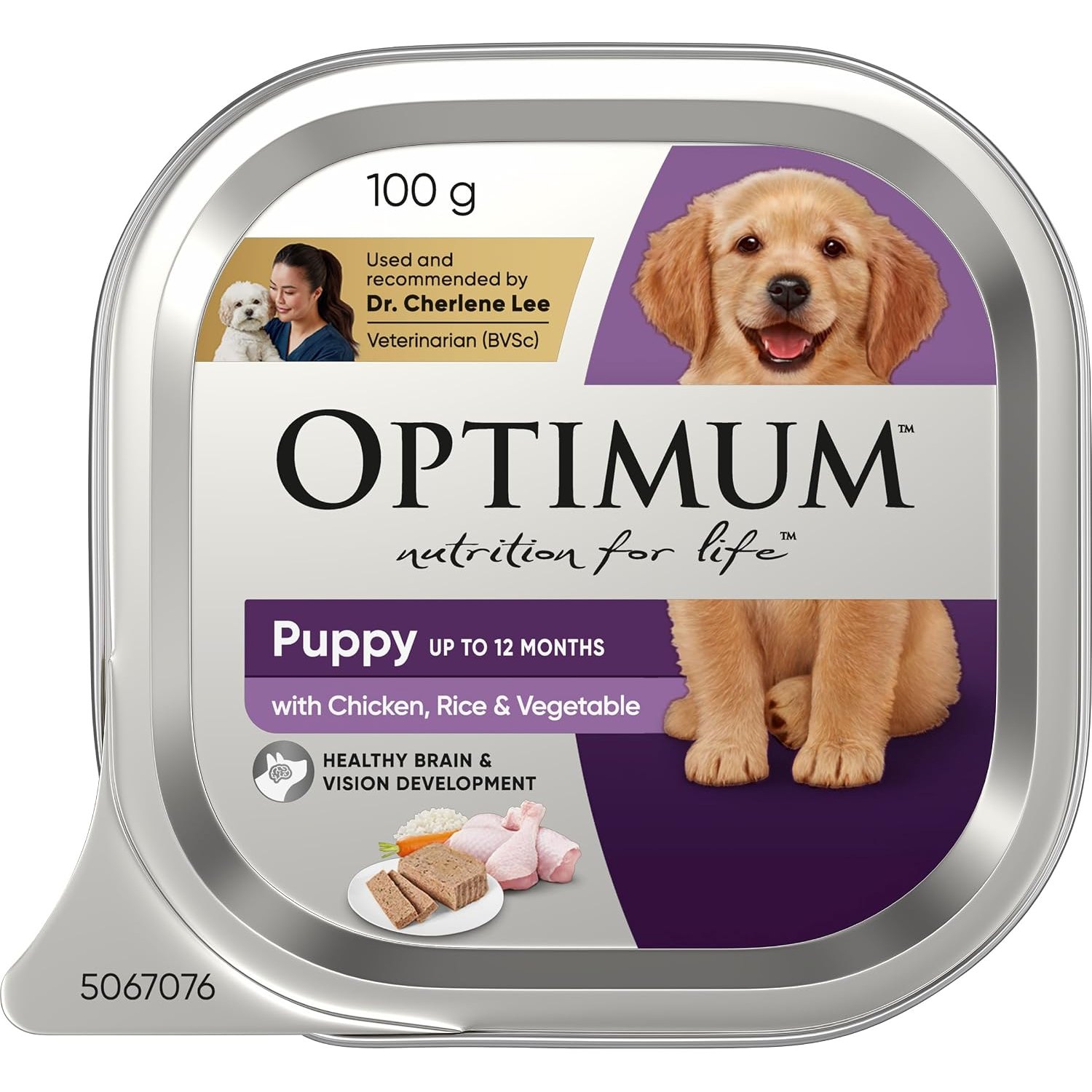
Single-serve trays exist because of exactly that. This pack holds 12 trays of 100 g each, 1.2 kg in total, of chicken and rice wet puppy food. One tray, one serve, nothing left over to manage. It is a small change to the routine that removes a daily decision.
How wet food in trays actually works
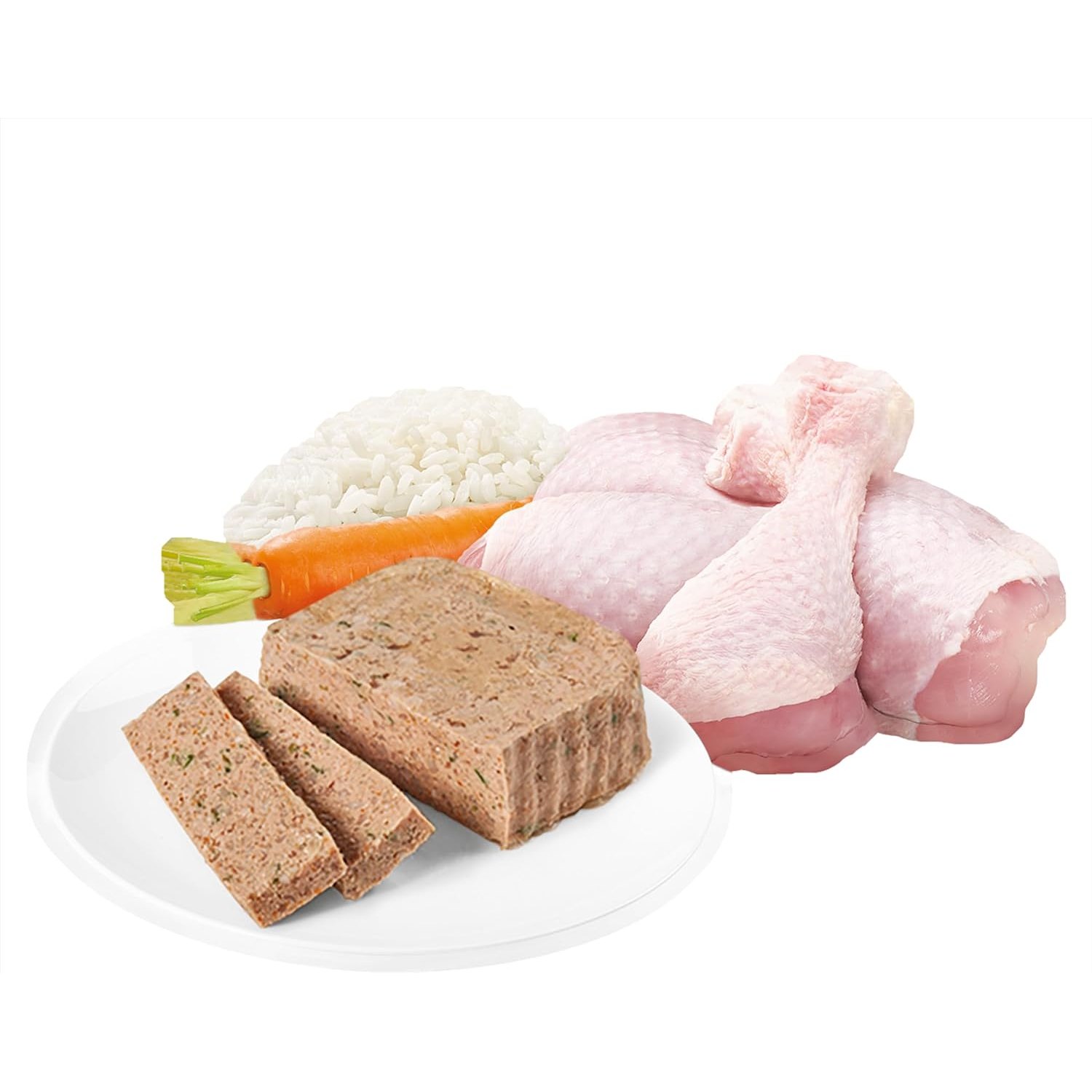
A sealed 100 g tray is a portion decided for you. You peel the lid, tip it into a clean bowl and that is the job done. There is no scoop, no measuring cup, no half-closed bag. The trays are steel and marked for recycling, so once rinsed they go out with the rest of your metal recycling if your council accepts it.
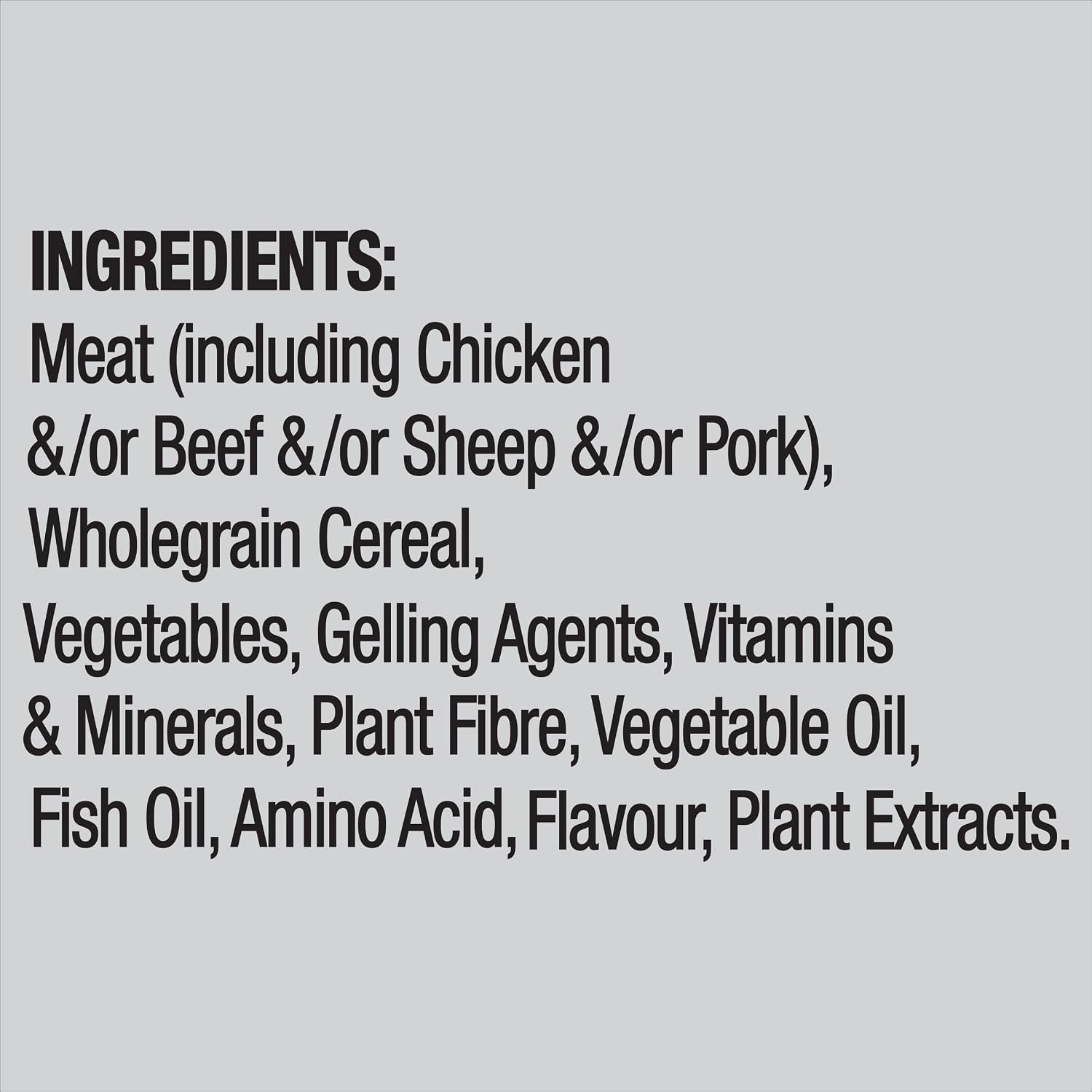
The wet format matters for young dogs who find biscuits hard going. The texture is soft and the food holds together, which is why gelling agents appear on the ingredient list. That list, exactly as the maker prints it, reads meat (chicken, beef and/or lamb and/or pork), rice, vegetables, gelling agents, sunflower oil, minerals, vegetable fibre, fish oil, antioxidants vitamins, and garlic. We reproduce it word for word rather than tidying it up, because the detail is the point. Note that the meat line covers more than one animal protein, so this is not a single-protein recipe.
Who a 12 tray pack suits
Twelve trays is a middle-ground quantity. It is more than a token try-out and less than a bulk carton. If you have just brought a puppy home and you are still working out what they will eat, a pack this size gives you a fair run without committing a shelf to it.
It also suits people with limited storage. Sealed trays stack flat and do not need refrigerating until opened, so they live happily in a cupboard. Anyone who has tried to find space for a case of tins will understand the appeal.
If you are feeding a larger puppy, be honest with yourself about how fast 1.2 kg will go. The feeding guide table printed on your pack will tell you the daily amount for your puppy's weight. Work from that number, not from a guess.
Working out how long a pack lasts
Here is the arithmetic, and it is worth doing once. Find the daily amount in grams on the printed feeding guide for your puppy's current weight. Divide 1200 by that figure. The answer is roughly how many days a pack will cover if this is the only food you are serving.
If you are feeding this alongside a dry food, the maker's directions say to halve the recommended quantities of each product. So your pack stretches further, but your dry food empties faster. Keep both numbers in your head when you reorder.
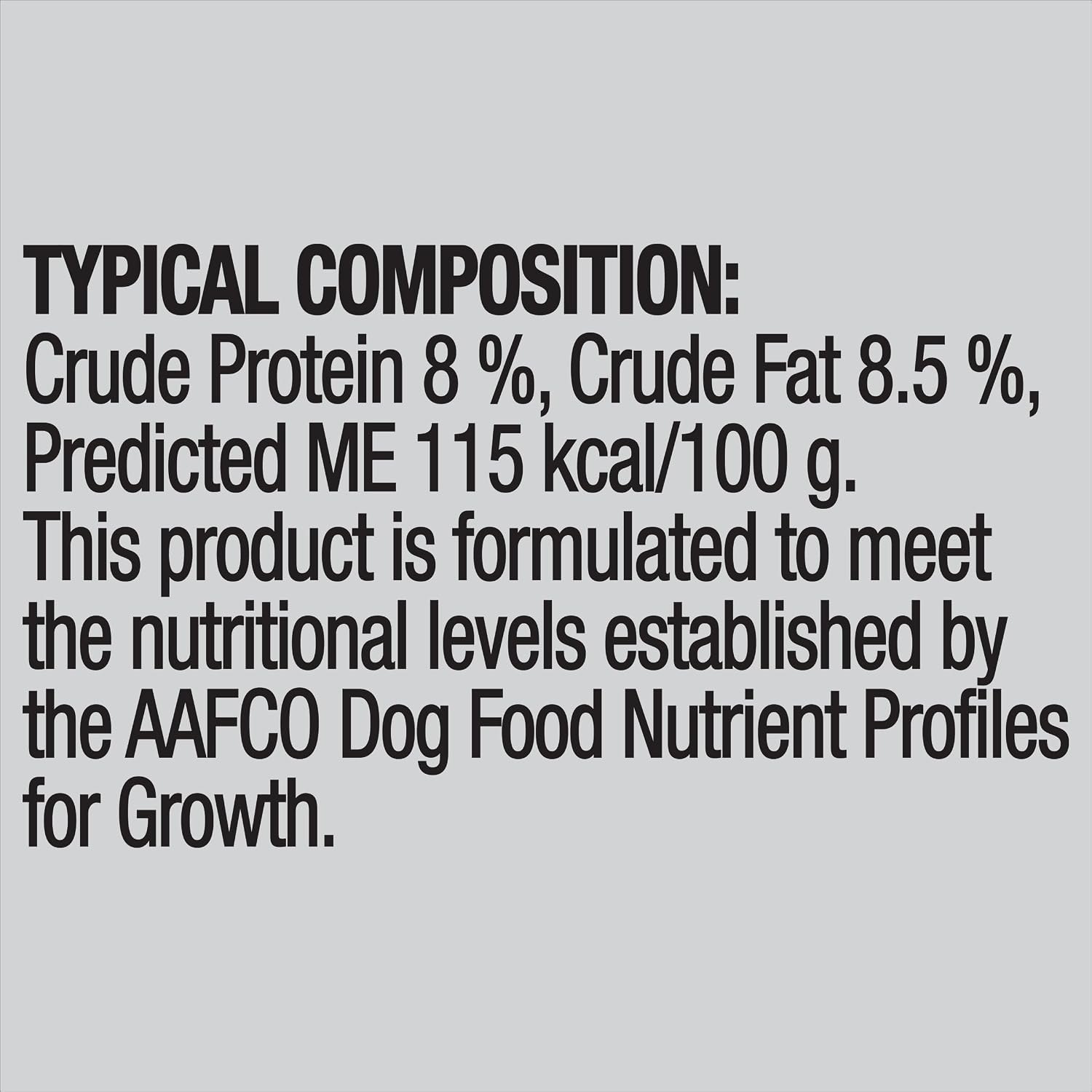
For cost, divide the pack price by 1.2 to get a price per kilogram. That is the figure to compare across wet foods. Do not compare it against dry food per kilo, because the two are not equivalent. Dry food has most of the water removed, so a kilo of it goes a long way further than a kilo of wet.
How to choose between wet options
Most people shopping for the best wet food for puppies are really weighing up four things. Portion size, because waste is money. Texture, because some puppies are particular. The ingredient list, because of allergies or simple preference. And price per kilo, because puppies grow and the bills add up.
On portion size, 100 g trays are small. For a tiny puppy that may be a full meal or even more than one. For a bigger one it is part of a meal. Neither is a fault, it just changes how many packs you buy.
On the ingredient list, read it properly before you order. If your puppy has reacted to a particular protein before, the combined meat line here is worth paying attention to. Anything beyond reading the list is a question for your vet, not for a product page.
Switching foods without drama
Do not change over in one go. Give it about a week. Start by mixing a small amount of the new food into whatever your puppy is already eating, then shift the balance a little more each day until you have fully swapped. A gradual change gives your puppy time to adjust and gives you time to notice if something is not agreeing with them.
Keep an eye on things through the switch. If anything concerns you, stop and ring your vet. That is always the right call, and no feeding guide on a pack replaces it.
Storage, serving and clean-up
Unopened trays go in a cool, dry cupboard out of direct sunlight. Check the date printed on the pack before you serve, the same as you would with anything else in the kitchen.
Once a tray is open, treat it like any other fresh food. Cover it or decant it into a sealed container, put it in the fridge and use it within a day or two. Food that has sat out in the bowl for hours should go in the bin rather than back in the fridge.
Wash the bowl after each meal. Wet food leaves residue, and a quick rinse is not really enough. And keep clean drinking water available at all times, which the maker's own directions call out. Puppies need it regardless of how moist their food is.
Delivery, returns and the practical bits
Orders are dispatched within 2 working days, then take up to 7 working days by tracked courier. Delivery is Australia only. It is free on orders of $99 or more, and a flat $12 below that, so it can be worth grouping a reorder with something else.
Change of mind returns are accepted within 14 days from delivery if the pack is unopened and still in its original sealed packaging, with return postage paid by you. We cannot take back opened food. If something arrives faulty, damaged or not as described, that is put right under the Australian Consumer Law, so get in touch with your order number and a photo.
The short version
This is a 12 pack of chicken and rice wet puppy food in 100 g single-serve trays, 1.2 kg in total, made for the puppy life stage. The trays remove the daily portioning job and the leftover problem. Breed size is not stated on the pack details we hold we hold, so use the feeding guide table on the pack and your puppy's weight to work out amounts.
Read the ingredient list before you buy, especially if allergies are in play. Split the daily amount into two meals as the maker suggests, halve things if you are also feeding a dry food, change over gradually across about a week, and keep the water bowl full. Anything health related goes to your vet, every time.